
Metis vs. Cruse: Comparing Professional Art Scanners
Quick answer
Metis and Cruse are the two scanner families that define professional, museum-grade artwork digitization. They share the same underlying idea: a single imaging sensor and a controlled, aligned light source capture the work in precise registration, producing a seamless file with accurate color and geometry that camera photography and multi-camera systems cannot match. The clearest mechanical difference is what moves. On a Cruse, the sensor and lighting stay fixed and the bed carrying the artwork moves beneath them. On a Metis, the bed stays put and the sensor and its light traverse the surface. Both belong to a category of instrument entirely separate from flatbeds and DSLR setups, and both are appropriate for the most demanding fine art and cultural heritage work.
The rest of this article explains what these scanners have in common, where the two approaches differ, and how to think about choosing between them for a specific project. Brooklyn Editions operates a Metis DRS 2020, so the Metis details here are grounded in the machine we run every day; the Cruse details are described at the level the comparison actually supports, without inventing model numbers or specifications.
What the two families have in common
A true fine art scanner is a rare and expensive instrument — often the size of a small car — found only in major museums, national archives, and a small number of fine art studios. The list of state-of-the-art makers is short, and Metis and Cruse are the two on it. Both share an architecture that separates them from everything else on the market:
- Single-sensor capture. The same optical system captures the first inch of the artwork and the last. There are no internal seams and no parallax differences between adjacent camera strips — the failure mode of multi-camera systems that arrange several cameras side by side and stitch their outputs in software.
- Aligned, controlled lighting. The light is held in a precise geometric relationship to the sensor and the work throughout capture, so every line is recorded under consistent illumination rather than the uneven angle a camera sees across a large surface.
- Color-managed, ICC-profiled workflows. Both deliver files tagged with wide-gamut profiles that any color-managed application can interpret consistently.
- Purpose-built for artwork — paintings, works on paper, photographs, textiles, and dimensional surfaces — not repurposed document or production scanners.
If a scanning service runs one of these two families, you are past the question of whether the equipment is adequate for serious work. What remains is how each machine captures and what each is best suited to.
Capture approach: what moves, and why it matters
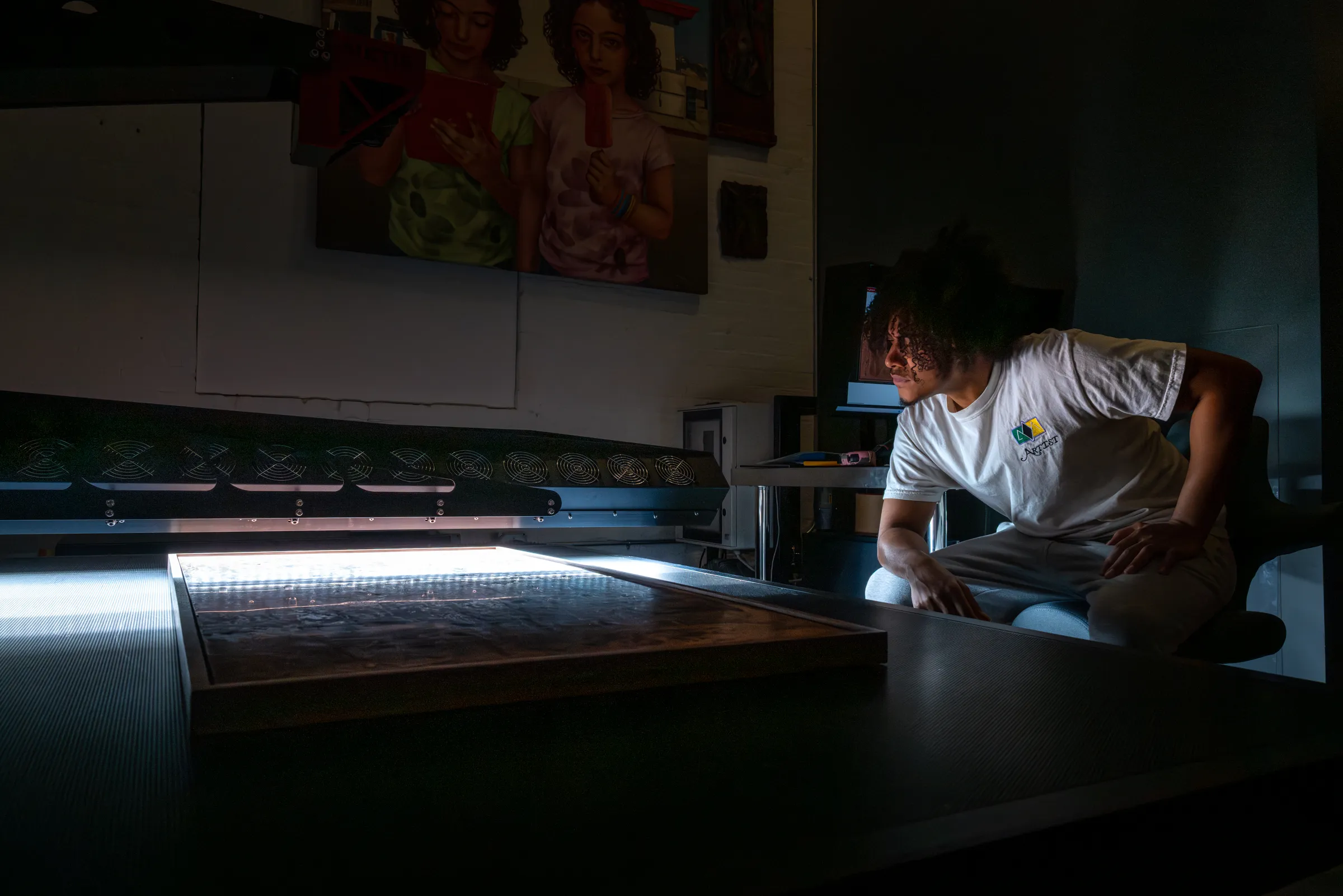
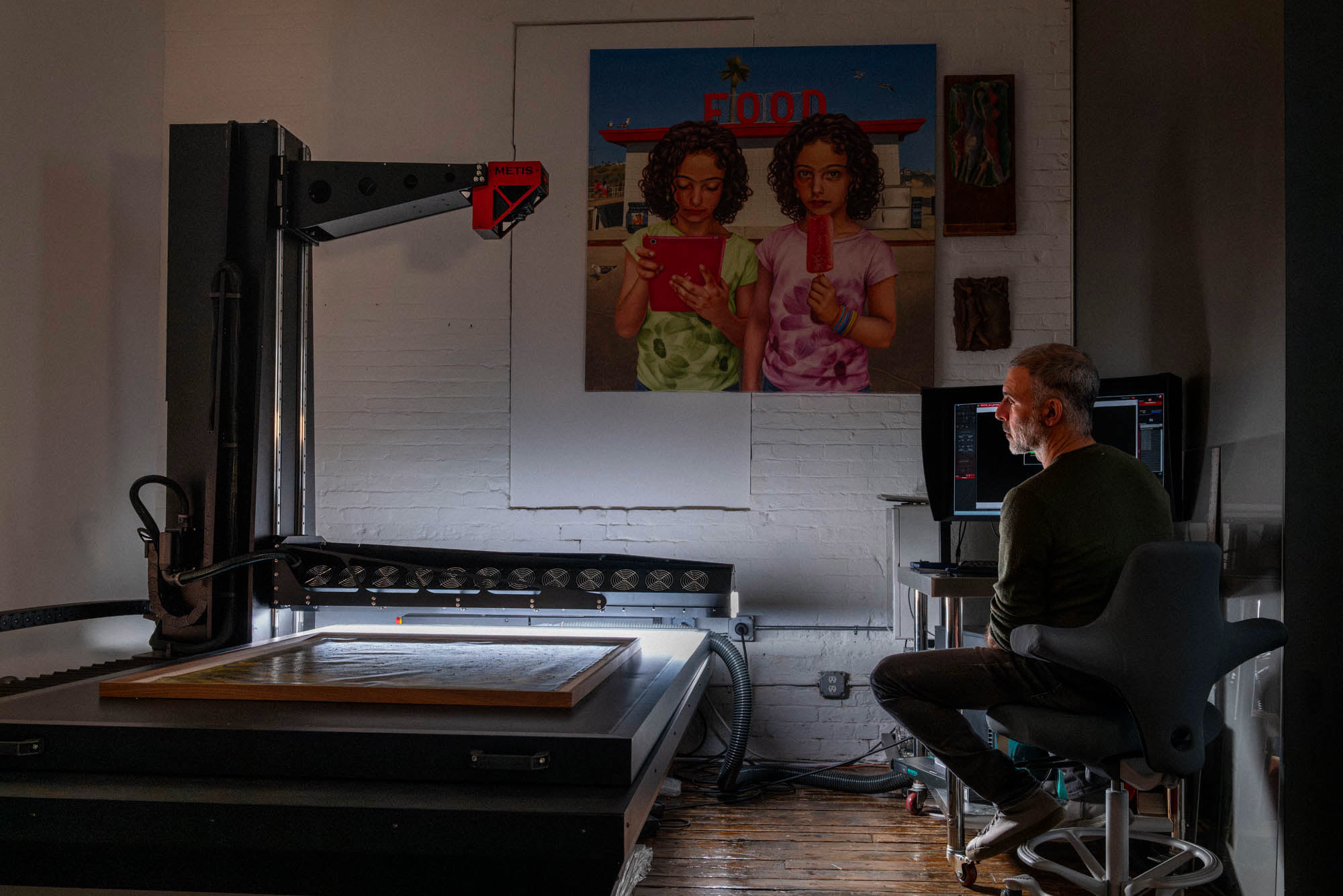
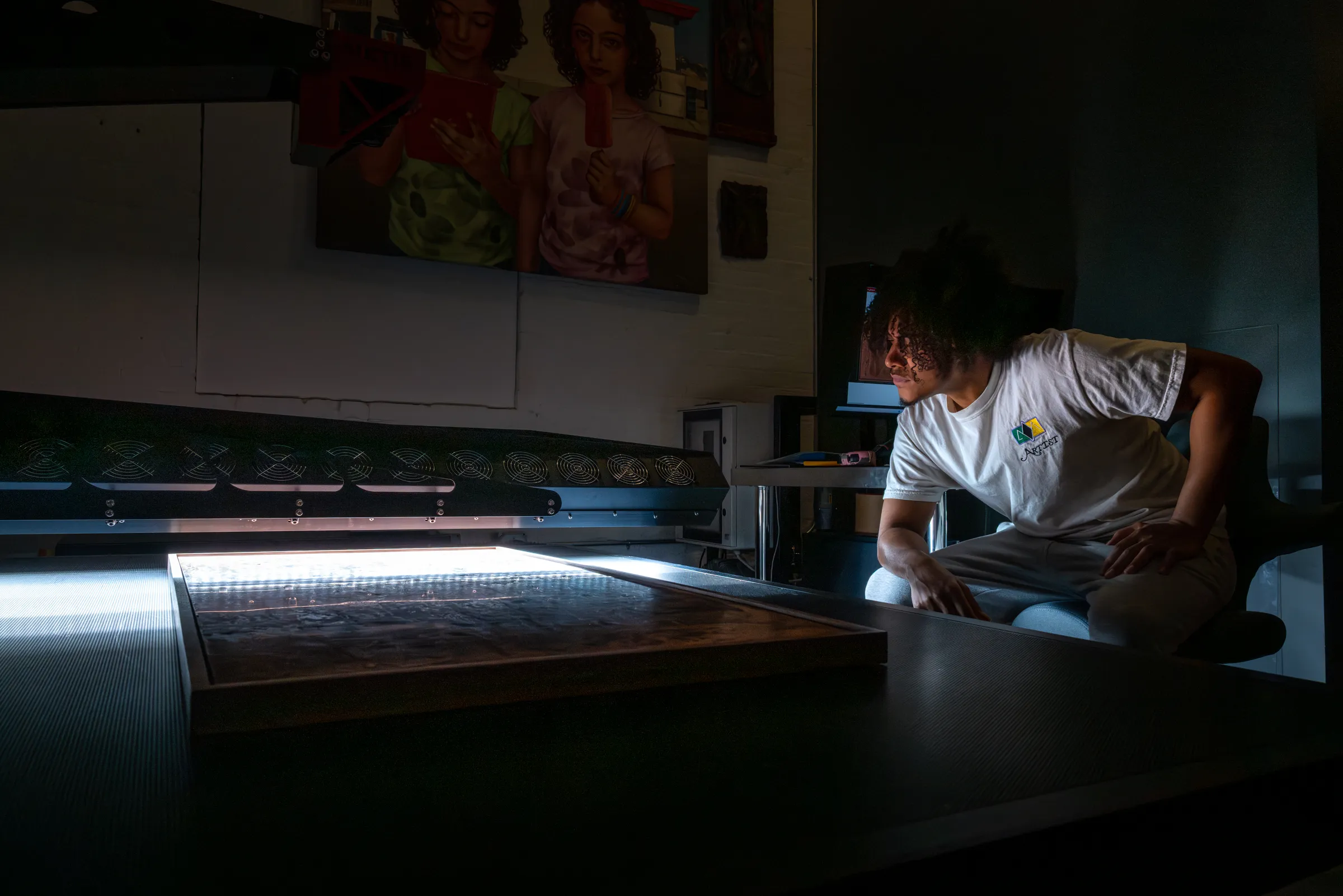
The defining mechanical difference is motion. On a Cruse-style system, the sensor and lighting are fixed and the table holding the artwork moves through the capture path. On the Metis DRS 2020, the artwork stays still on the bed and the sensor and its lighting move across it in a single registered pass.
For most flat artwork both approaches produce an excellent result — this is a difference operators feel more than clients do. A moving sensor passing over a stationary work means the original is placed once and held still, which suits delicate pieces and works held flat by a vacuum table. Both methods keep the optical geometry consistent across the surface, which is the point: every pixel is captured at the same angle and distance, so the file is true to scale in a way no camera lens — each of which carries some distortion — can achieve.
Large-format handling
Both families are built for work that exceeds conventional scanner beds — one of the main reasons institutions invest in them. Most flatbeds stop at tabloid size; these systems capture paintings several feet across in a single pass.
The Metis DRS 2020 accommodates artwork up to roughly 79 by 47 inches in a single contactless pass. For murals, panoramic photographs, large tapestries, and architectural drawings that exceed even that footprint, its Scan Merge system stitches multiple passes into one seamless file with sub-pixel registration. Because every pass is made by the same sensor under the same lighting, the stitched result is indistinguishable from a single-pass capture — no visible seams, no tonal shifts at the joins. Cruse-family systems likewise handle oversized work; their bed-moves approach suits large, flat originals laid out on the table. The headline is the same from either family: scale is rarely the limiting factor. The questions worth asking any studio are the single-pass bed dimensions and whether stitching is available beyond them. See our pillar guide to fine art scanning for more on bed size and large-format capture.
Surface and texture
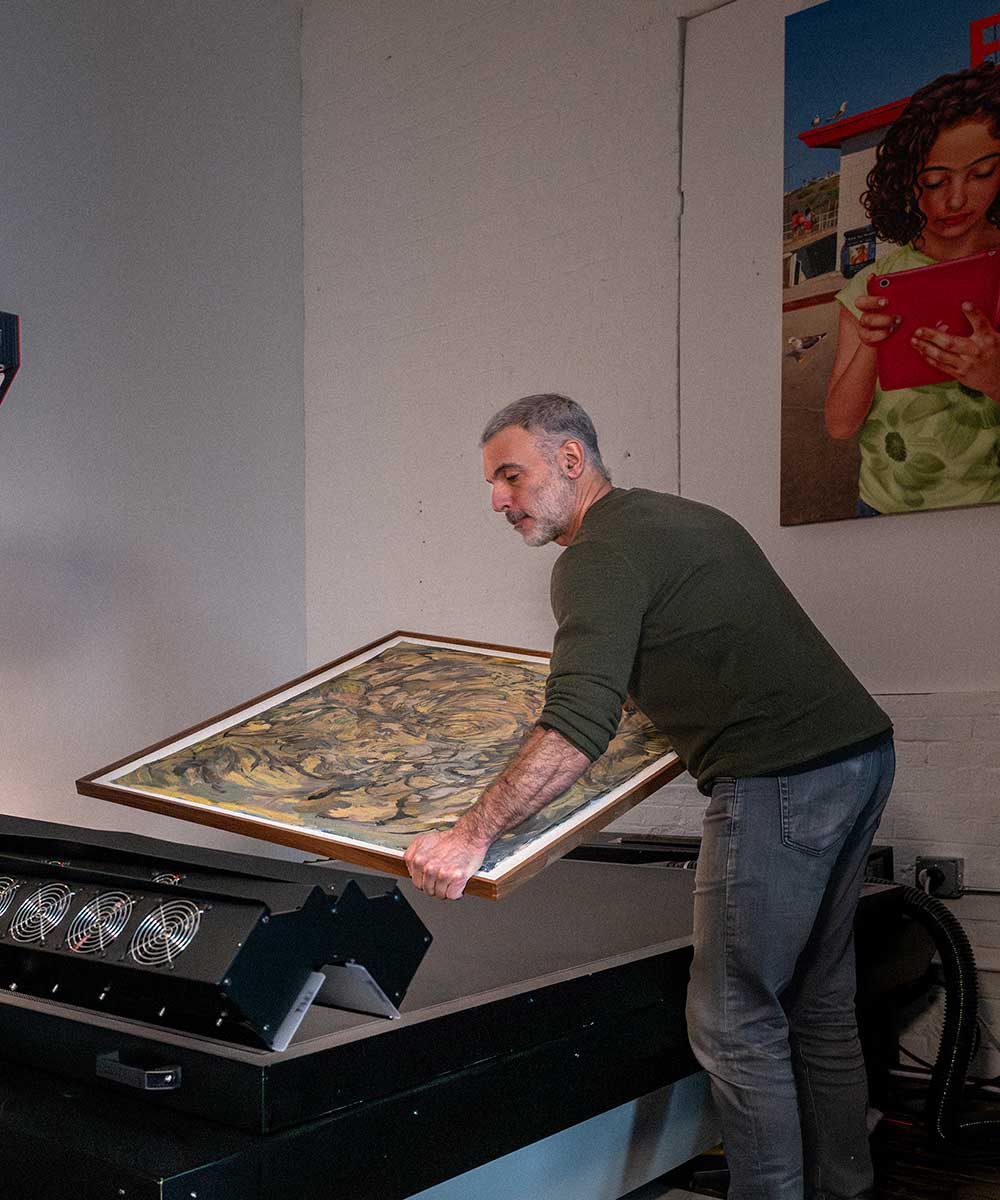
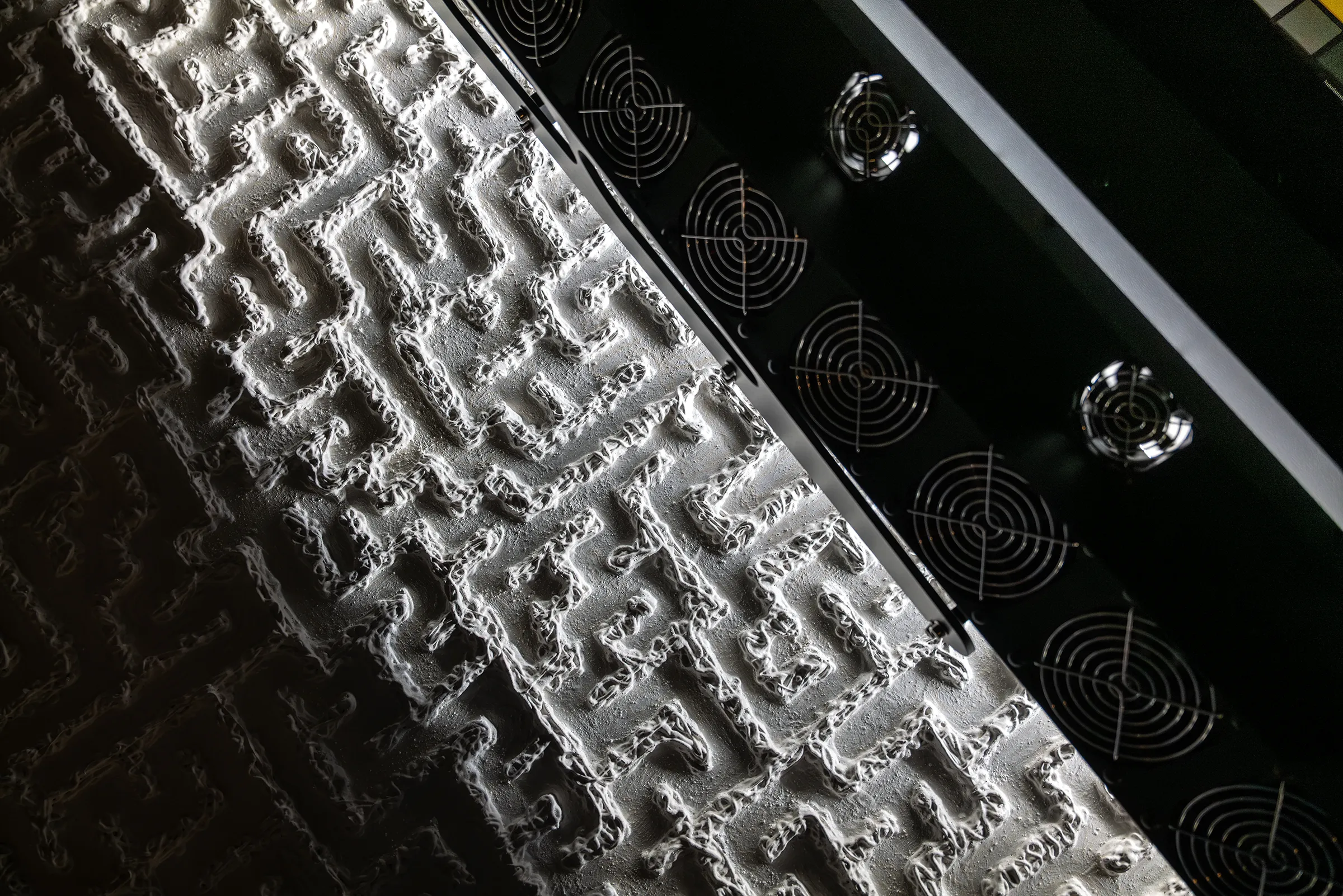
Surface is where the choice of instrument starts to show, and where both families pull decisively ahead of cameras and flatbeds. For many paintings, the surface is the work: the ridge of an impasto stroke, the tooth of rough canvas, the sheen difference between varnished and matte passages. A flat photograph or a fixed-light flatbed loses most of this.
Both Metis and Cruse use directional, aligned lighting to render relief — casting the controlled shadows that make texture read — and offer depth-of-field control for dimensionally complex surfaces. The Metis approach to this is its DC Synchrolight system: eight independently controlled LED sources whose angle and intensity vary across the scan, so a work with both smooth and heavily textured passages can be optimized across its full surface rather than compromised to a single lighting setting. Metis records all of those lighting configurations together in its SuperScan (MDC) format, which means the balance between diffuse and directional light — how strongly texture is revealed — can be adjusted after the scan is finished, without the artwork present. From the same multi-angle data, the Metis system can derive 3D depth maps and glossiness maps using photometric stereo, supporting conservation records, embossed reproduction, and surface analysis.
The honest framing for a comparison: both families capture surface far better than anything outside this category, and the specific texture and material-data tools differ between them. We can speak in detail about how the Metis renders texture because we run one; we describe Cruse capabilities only in general terms because inventing specifics would not serve you. If surface fidelity is central to your work, see scanning textured paintings and how Metis scanners capture surface texture.
Color
Color accuracy is a strength of both families, for the same structural reason: because the sensor and light hold a fixed relationship to the work, both can be calibrated against known color references and deliver files in a wide-gamut, ICC-profiled color space — the foundation of a print that matches the original. The Metis captures 48-bit color (16 bits per channel), preserving the full dynamic range of the original and giving the reproduction workflow room to operate without banding or loss in shadows and highlights. Color outcomes depend at least as much on the workflow around the scanner as on the scanner itself — calibration discipline, viewing conditions, and whether color is verified against the original before prints are made. For the underlying concepts, see color accuracy in art scanning.
How to choose between them
For most projects either family will satisfy the most demanding reproduction or archival standard — the decision is rarely a question of one being adequate and the other not. What tends to matter more:
- What the studio actually operates. The operator's skill and the integrity of the color-managed workflow shape the file as much as the instrument. A great studio on either family beats a careless one on the other.
- Surface and material data. If you need 3D depth maps, glossiness data, or PBR-style material outputs, ask the studio specifically what their system produces — the Metis derives these from its SuperScan capture, for example.
- The work itself. Scale, fragility, surface texture, and reflective materials all affect which setup handles a given piece most gracefully.
The most useful step is almost always a conversation with the studio about your specific work and its intended use, before fixating on which family is on the floor.
Frequently asked questions
Is Metis or Cruse better for fine art scanning?
Neither is universally better. Both are state-of-the-art families used by leading museums and archives, and both share the single-sensor, aligned-lighting architecture that defines professional artwork scanning. For most projects the result from either is excellent, and the operator's skill and the studio's color-managed workflow influence the final file at least as much as the choice between the two machines.
What is the main difference between a Metis and a Cruse scanner?
The clearest mechanical difference is what moves during capture. On a Cruse, the sensor and lighting are fixed and the bed carrying the artwork moves; on a Metis, the bed stays still and the sensor and its lighting traverse the surface. Both keep the optical geometry consistent across the work, producing seamless, true-to-scale files.
Can both scanners capture surface texture?
Yes. Both families use directional, aligned lighting and depth-of-field control to render relief such as impasto and canvas weave, far beyond what a camera or flatbed can capture. The Metis system adds its DC Synchrolight multi-angle lighting and photometric-stereo 3D data, recorded together in its SuperScan format so texture can be adjusted after capture.
Which scanner does Brooklyn Editions use?
Brooklyn Editions operates the Metis DRS 2020, with its DC Synchrolight lighting system, SuperScan multi-lighting capture, and photometric-stereo 3D capability. We are happy to discuss which approach suits a specific project, including when a different system might be worth considering.
Professional Artwork Digitization at Brooklyn Editions
At Brooklyn Editions, artwork is digitized using the Metis DRS 2020 — a professional scanning system with a native optical resolution up to 1600 PPI and a scan bed capable of capturing large paintings in a single contactless pass. Every scan project begins with a consultation to discuss the artwork, its dimensions, and the intended use of the files, so that we can recommend the right resolution and workflow before any work begins.
If you're planning to reproduce artwork as prints, create an archival digital record, or produce an edition, our scanning services page has full details on the process, file delivery, and how to get started.