
Flatbed vs. Professional Art Scanning
Quick answer
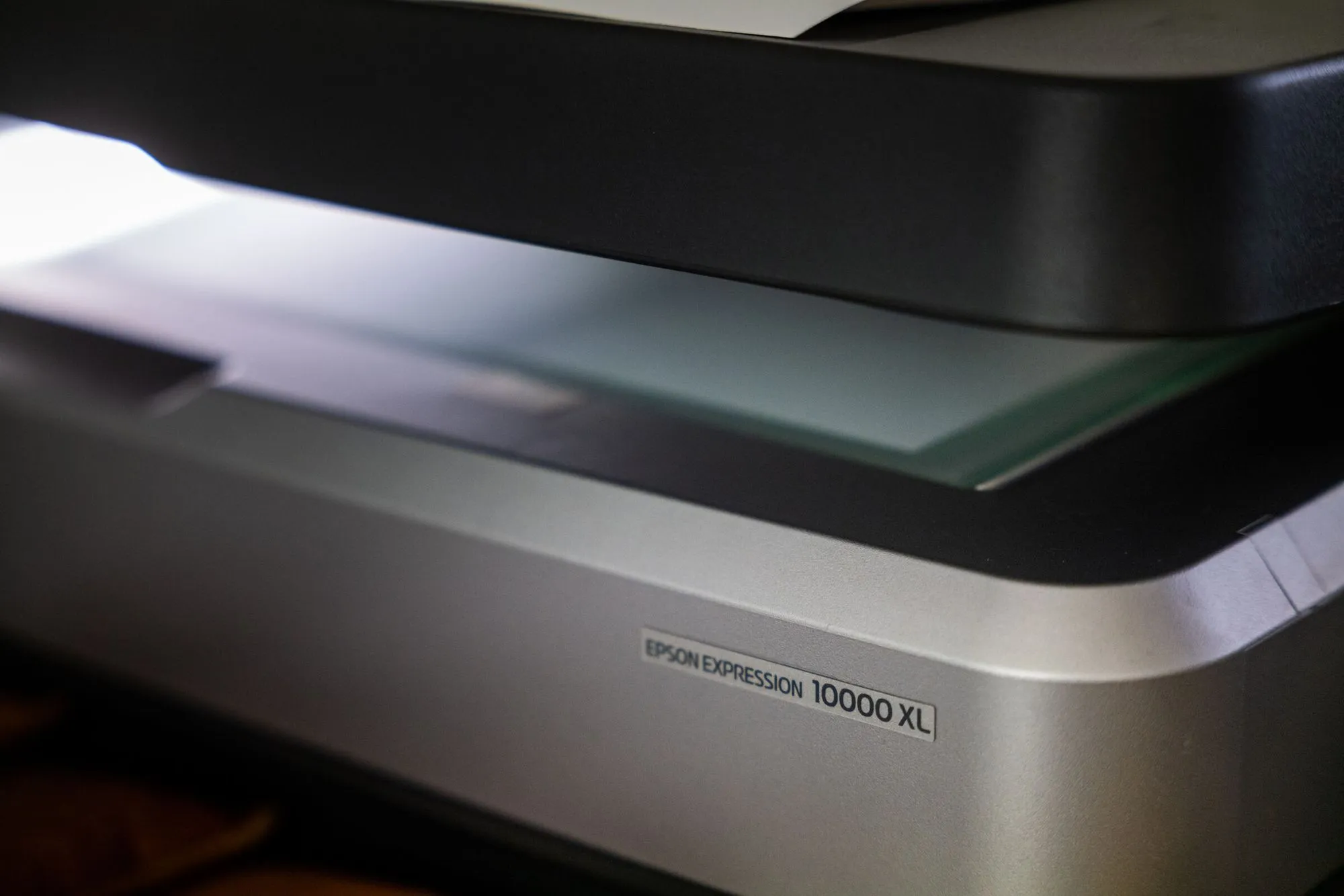
A flatbed scanner can do honest work on small, flat, robust artwork — a drawing, a print, a photograph that fits the glass. It runs out of room fast: most flatbeds max out around 11 × 17 inches, press the artwork face-down against glass, lack the dynamic range for high-contrast work, and quote interpolated resolution figures that overstate what they actually resolve. A professional fine art scanner adds a large contactless scan bed, calibrated color management, controllable directional lighting, high dynamic range, and genuine high optical resolution. Use a flatbed when the work is small, flat, and undemanding. Use a professional scanner when it is large, textured, high-contrast, valuable, or headed for reproduction or archive.
The rest of this article explains where each limit bites and how to decide.
Where a flatbed runs out of room
A flatbed is a capable consumer instrument inside its envelope. The trouble is how narrow that envelope is for fine art.
Size
Most flatbed scanners have a scan bed of roughly letter or tabloid size — about 8.5 × 11 or 11 × 17 inches. Anything larger cannot be scanned in one piece. The workaround is to scan the artwork in sections and stitch them in software, which introduces registration errors, lighting mismatches between sections, and seams that are hard to hide. For any artwork bigger than a sheet of paper, size alone often rules a flatbed out. See scanning large paintings for how oversized work is handled properly.
Contact with the surface
A flatbed works by pressing the artwork face-down against a glass platen. For a sturdy print that is merely inconvenient; for original artwork it is a real risk. Pressure can flatten paper, disturb loose media like charcoal or pastel, mark a delicate surface, and harm a textured or fragile work. Anything with raised surface — impasto paint, collage, heavy texture — cannot lie flat against glass without being crushed or going out of focus, because the depth that makes it interesting is exactly what the flatbed cannot accommodate.
Resolution and what the number means
Flatbed marketing advertises large resolution figures — 4800, 6400, even 9600 DPI. Most of that is interpolated, not optical. Native optical resolution is the real resolving power of the sensor and optics: the count of distinct pixels the hardware actually measures per inch. Interpolated resolution is a software step that calculates extra pixels between the real ones, producing a bigger file with no additional real detail from the artwork. A scanner advertised at 9600 DPI with a 600 PPI native optical resolution captures no more genuine detail than a 600 PPI scan. The headline number tells you the file size it can output, not the detail it can resolve. For what resolution you actually need, see what resolution artwork should be scanned at.
Dynamic range
Dynamic range is how much detail a scanner holds in the lightest and darkest parts of an image at once. A dark painting with bright highlights, or a photograph with deep shadows and a bright sky, can exceed a flatbed's range — shadows block up to solid black, or highlights blow out to paper white, and the detail in between is gone. Consumer flatbeds are built for documents and snapshots, where the tonal range is modest. High-contrast artwork asks for more than they hold.
Color management
Many flatbeds offer limited or no real calibration and ship files without robust color management. A file with no embedded profile looks acceptable on the screen it was made on, then shifts when opened elsewhere or sent to print. For reproduction, where the print has to match the original, that uncertainty is disqualifying. See color accuracy in artwork scanning for why color management is the deciding factor.
What a professional fine art scanner adds
A dedicated fine art scanner exists to remove exactly these limits.
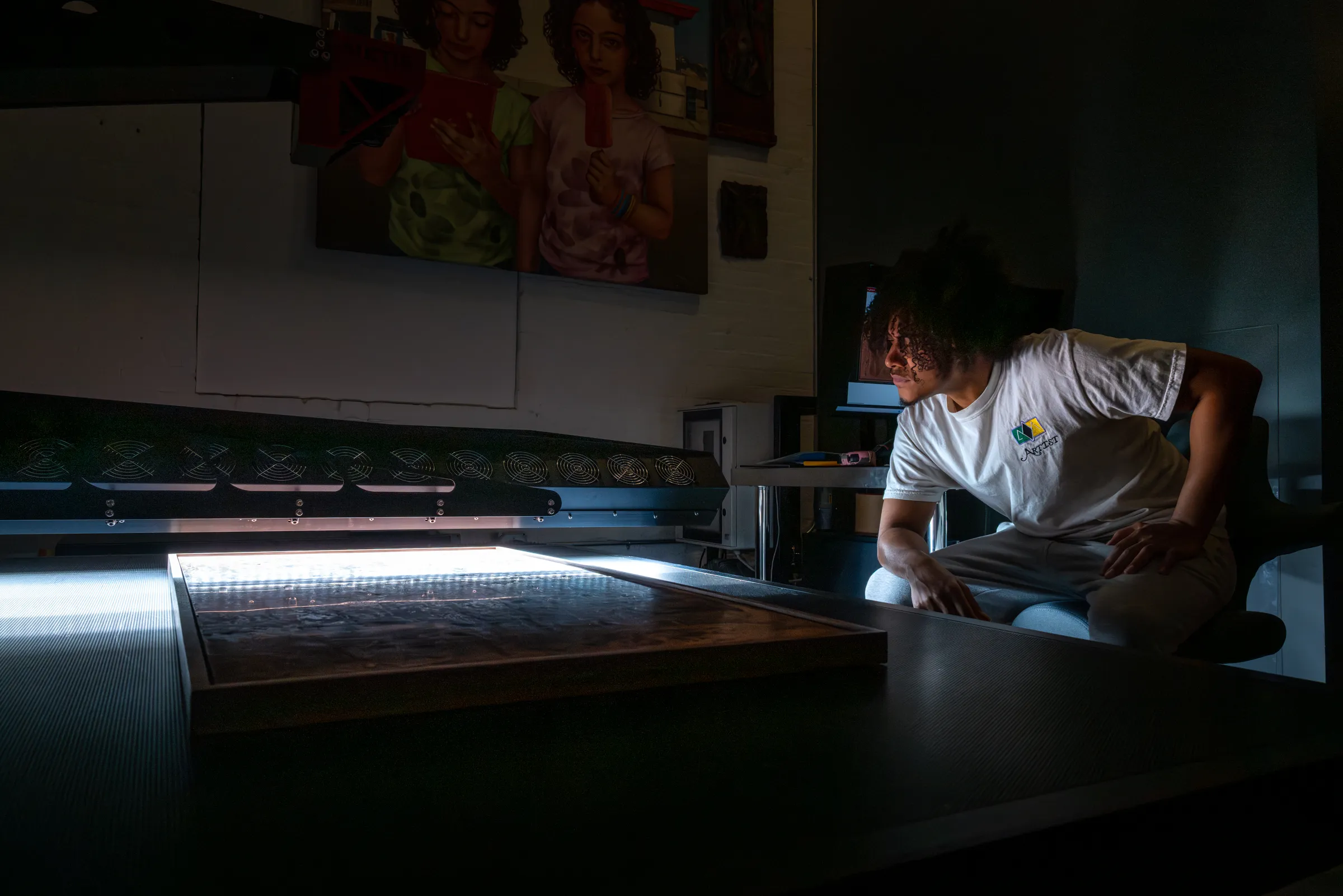
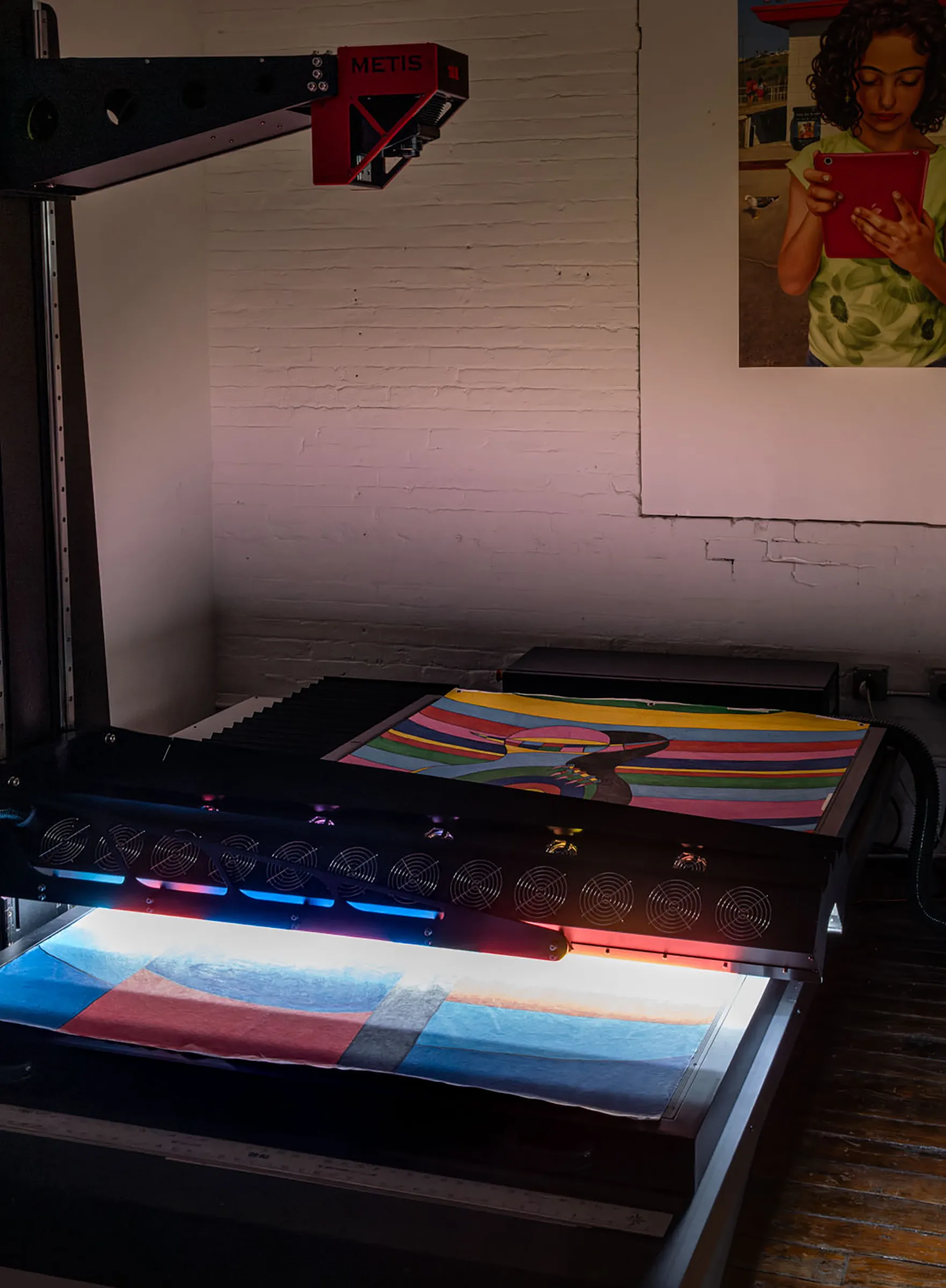
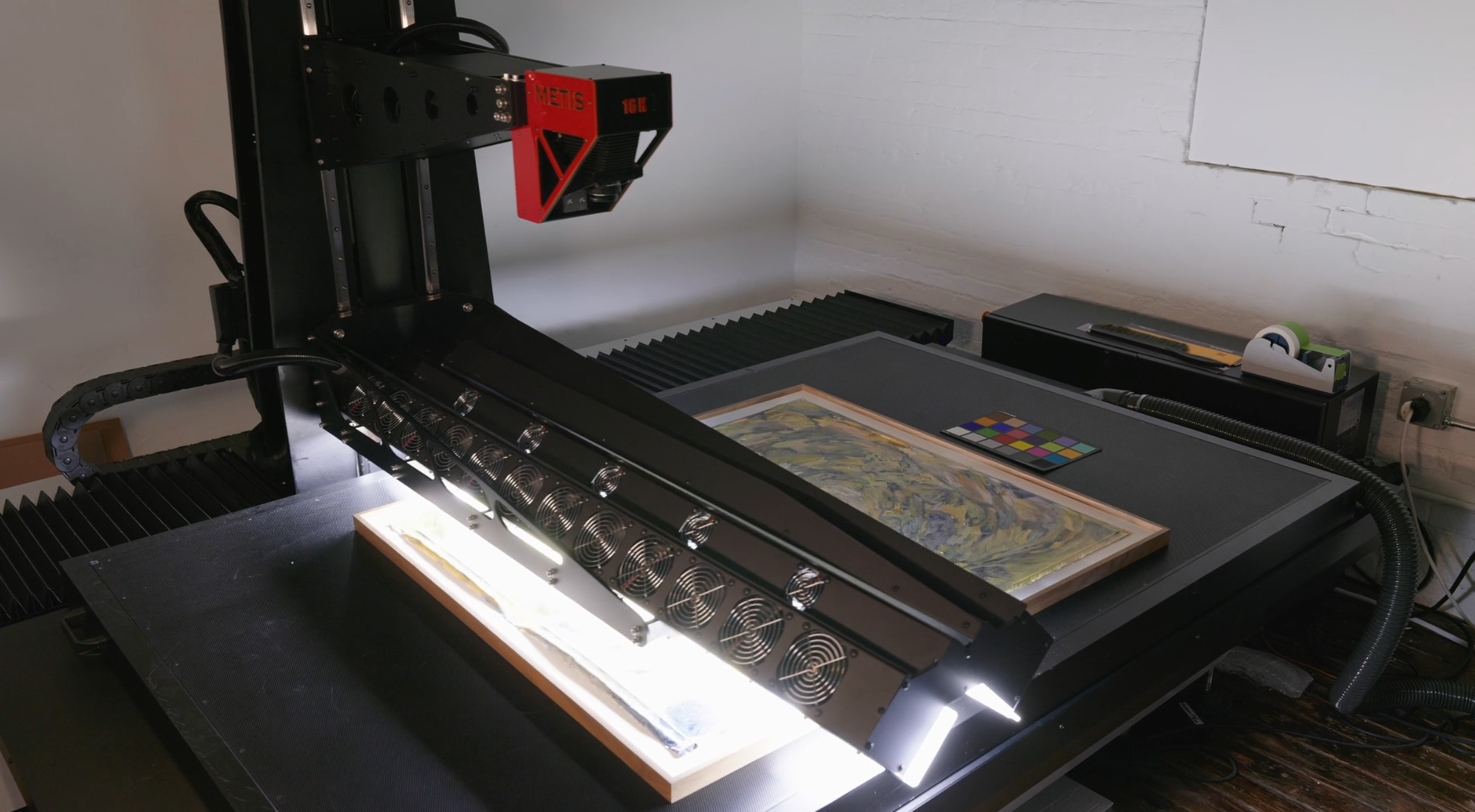
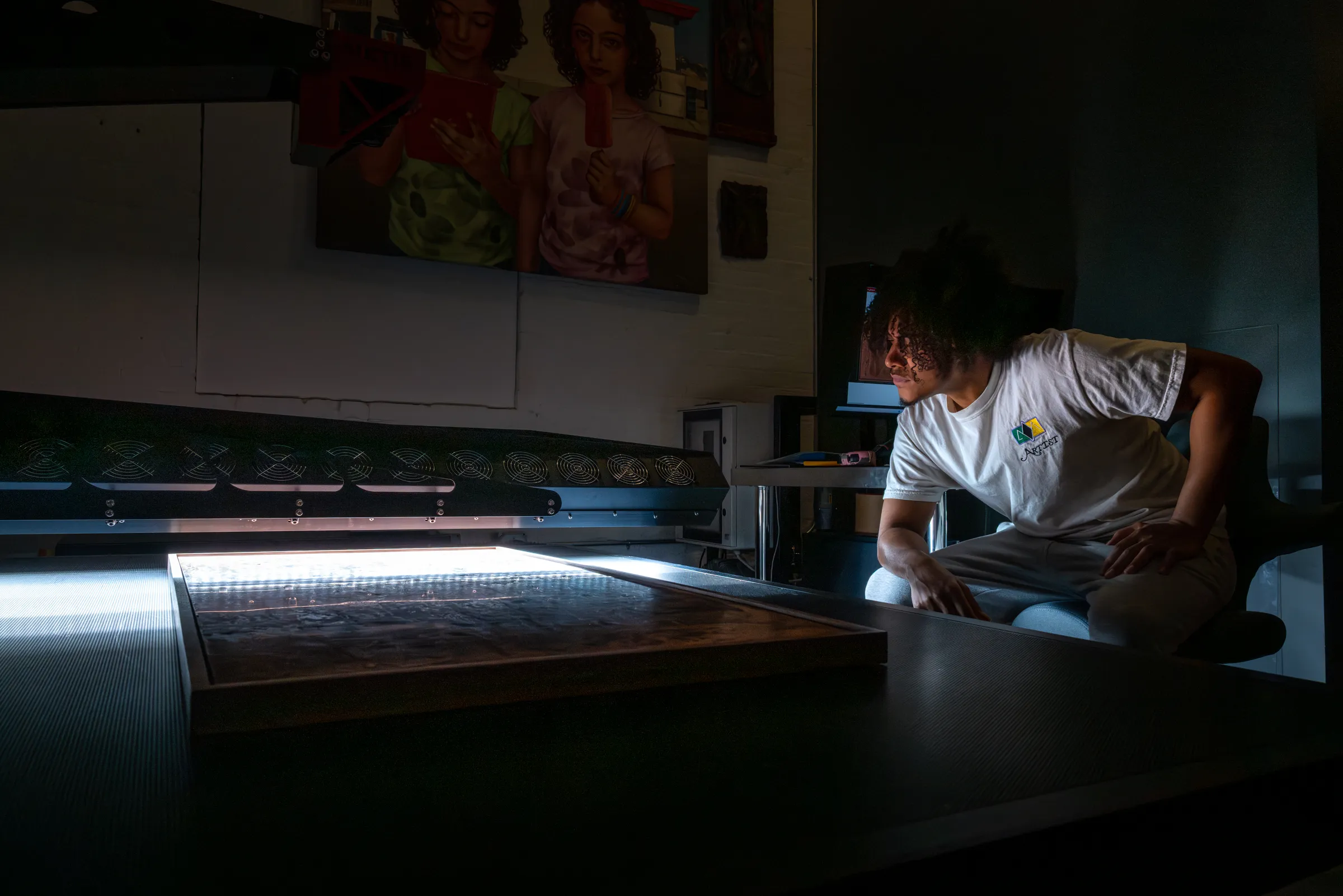
- A large, contactless bed. Professional systems capture paintings several feet across in a single pass, with precise stitching available beyond that. Contactless capture applies no pressure to the surface, so fragile and textured work is handled safely.
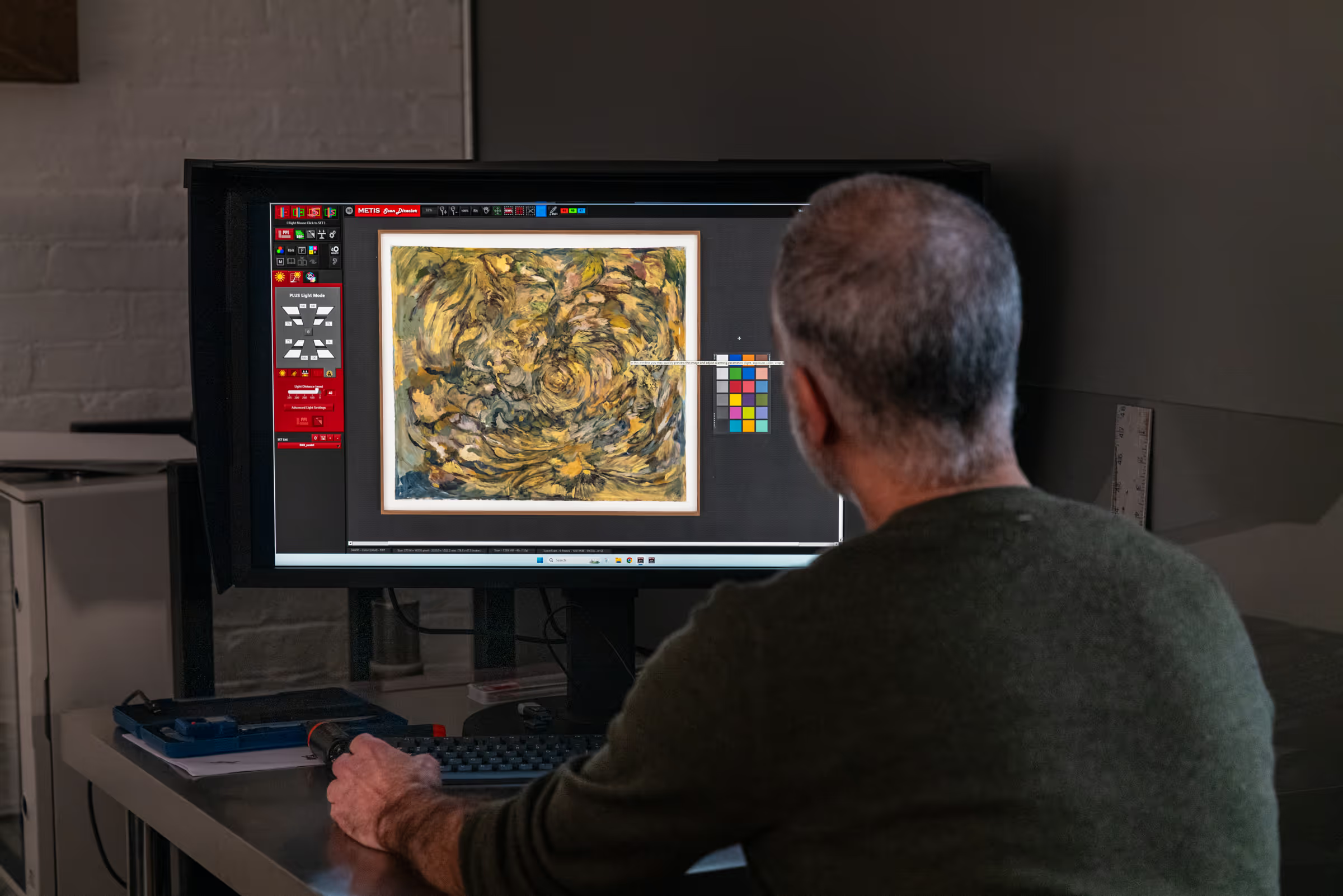
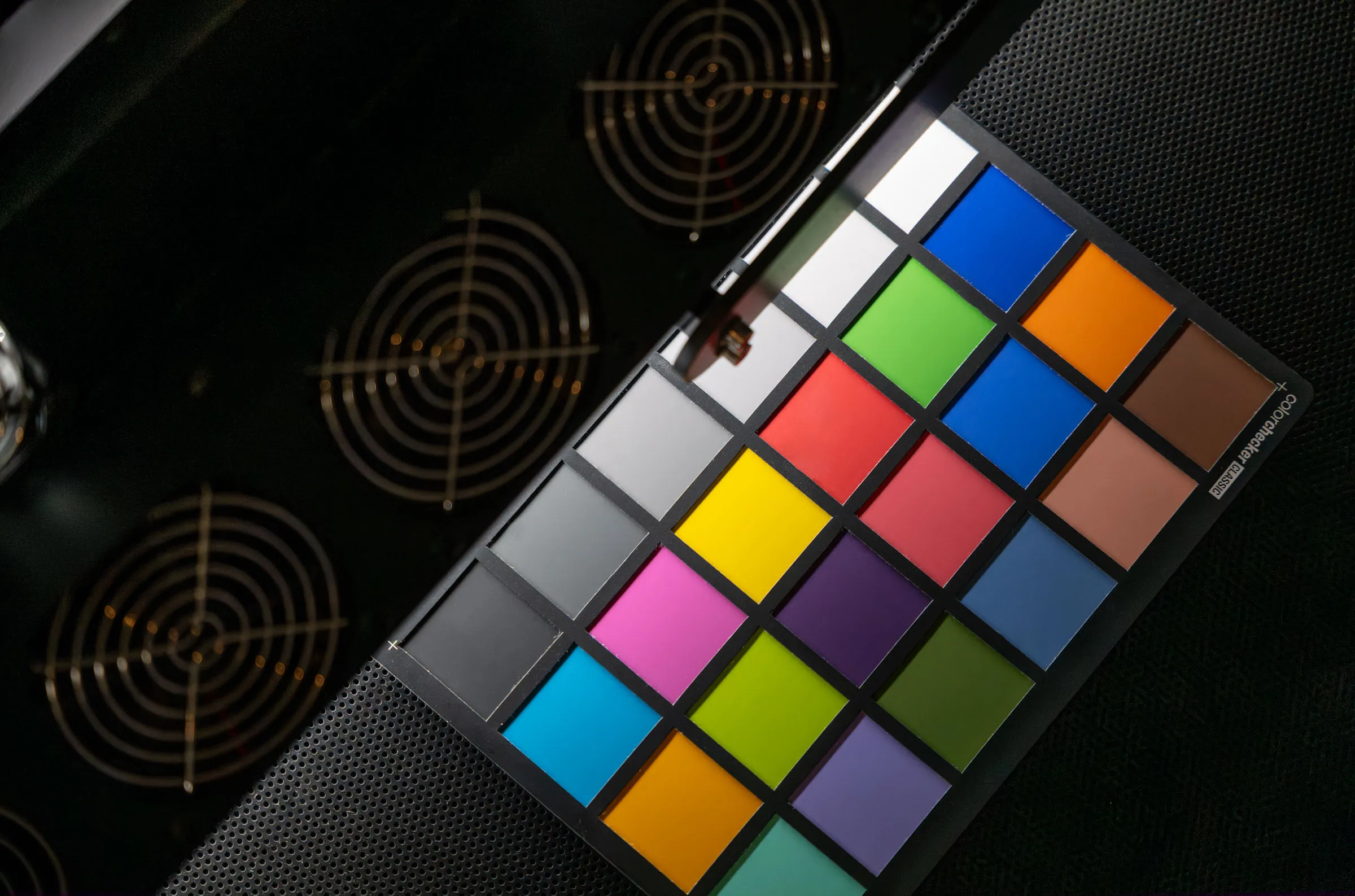
- Calibrated, color-managed capture. The sensor is calibrated against known color values and files are delivered tagged with a wide-gamut ICC profile, so color stays consistent from scan to screen to print.
- Controllable directional lighting. Multiple light sources whose angle and intensity can be varied reveal texture, gloss, and depth — or flatten them when a smooth reproduction is wanted. Fixed flatbed lighting cannot do this.
- High dynamic range. Professional systems hold detail across the full tonal range of the original, from deep shadow to bright highlight, without clipping.
- Genuine high optical resolution. The native optical resolution is the real captured figure, not an interpolated one. The Metis DRS 2020, for instance, has a native optical resolution up to 1600 PPI — a true measurement of what the sensor captures.
When a flatbed is fine, and when it is not
A flatbed is a reasonable choice when the artwork is:
- Small enough to fit the glass with margin.
- Flat and robust — a print, a sturdy drawing, a photograph.
- Free of loose or fragile media and raised texture.
- Modest in contrast, without deep shadows or bright highlights that must both hold detail.
- Bound for low-stakes use, such as a web image or a casual record.
Reach for a professional scanner when the artwork is:
- Larger than the flatbed bed.
- Textured, three-dimensional, or fragile, where surface contact is a problem.
- High in contrast, where dynamic range matters.
- Valuable or irreplaceable, where handling risk is unacceptable.
- Destined for reproduction, edition printing, or archival preservation, where color accuracy and true resolution decide the result.
The honest summary: a flatbed handles the easy cases, and the cases that make fine art demanding are the ones it cannot handle.
Frequently asked questions
Can I scan a large painting on a flatbed by doing it in sections?
You can attempt it, but the result rarely holds up for reproduction. Stitching sections introduces registration errors and lighting mismatches between passes, and pressing a painting against glass risks the surface. For large work, a large-bed professional scanner that captures the piece in a single contactless pass is the reliable approach.
Is a flatbed's advertised DPI the same as a professional scanner's resolution?
Not necessarily. Flatbed headline figures are often interpolated — pixels calculated in software rather than captured by the sensor. Professional scanners are specified by native optical resolution, the real resolving power of the hardware. Always ask for the native optical figure when comparing equipment.
Will a flatbed damage my artwork?
It can. Pressing artwork against glass applies pressure that can flatten paper, disturb loose media such as charcoal or pastel, and stress fragile or textured surfaces. A contactless professional scanner applies no pressure, which is why it is the safer choice for original and valuable work.
Is a flatbed good enough for selling giclée prints?
Usually not. Giclée reproduction depends on accurate color, adequate true resolution, and full tonal range — the areas where flatbeds are weakest. For prints you intend to sell, a professional color-managed scan gives you a file that matches the original.
Professional Artwork Digitization at Brooklyn Editions
At Brooklyn Editions, artwork is digitized using the Metis DRS 2020 — a professional scanning system with a native optical resolution up to 1600 PPI and a scan bed capable of capturing large paintings in a single contactless pass. Every scan project begins with a consultation to discuss the artwork, its dimensions, and the intended use of the files, so that we can recommend the right resolution and workflow before any work begins.
If you're planning to reproduce artwork as prints, create an archival digital record, or produce an edition, our scanning services page has full details on the process, file delivery, and how to get started.