
NYC Fine Art Scanning
Quick Answer
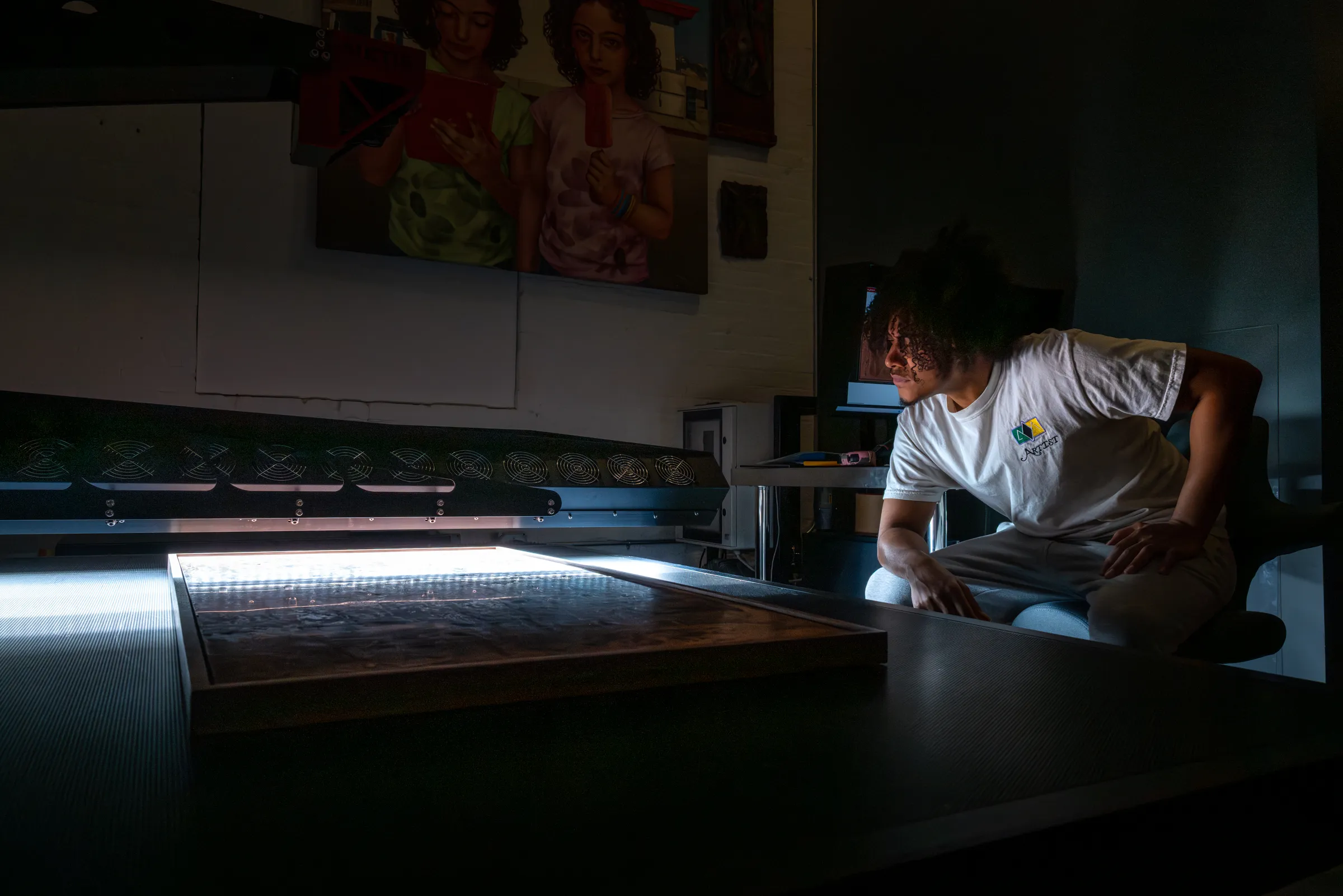
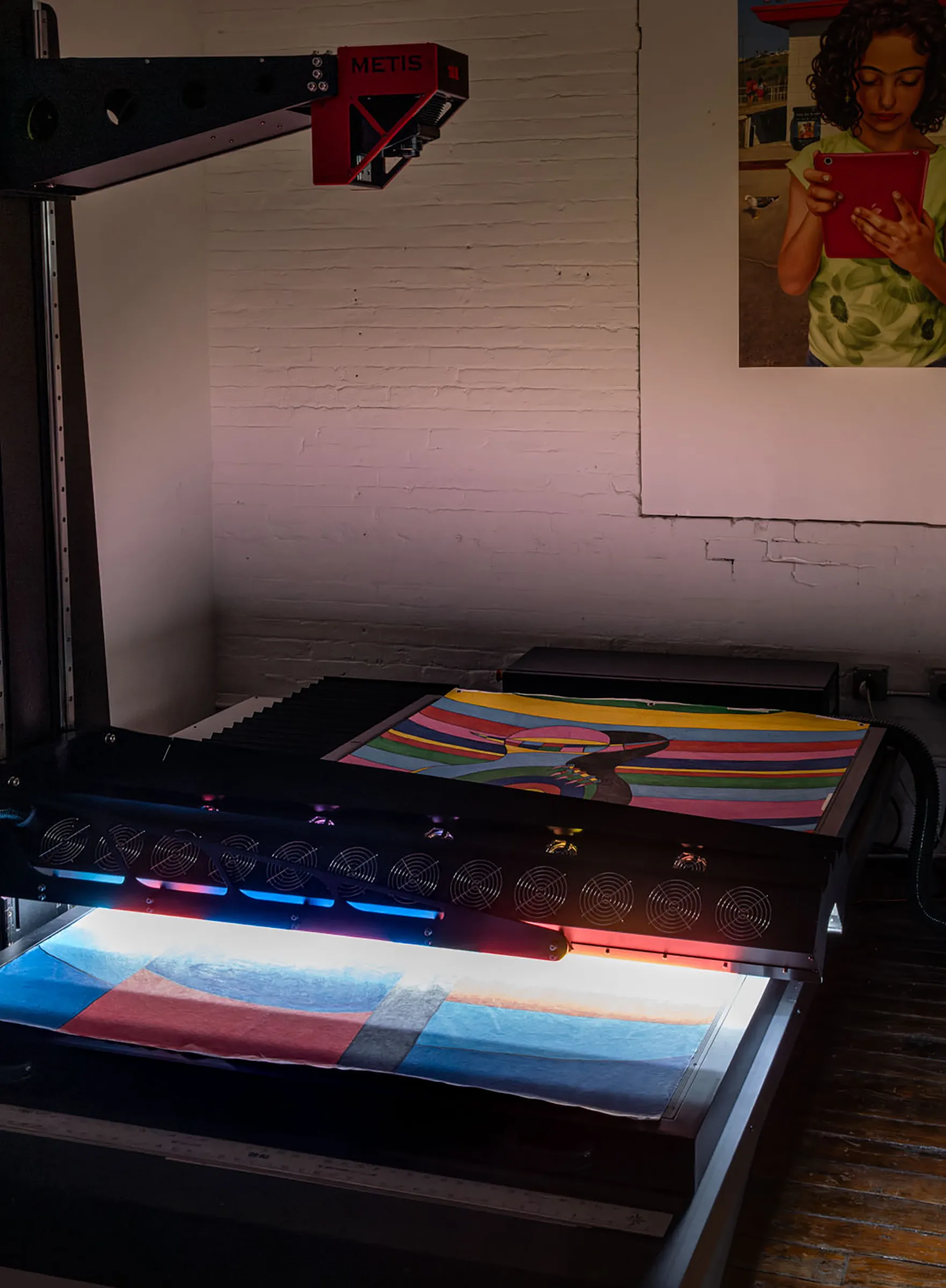
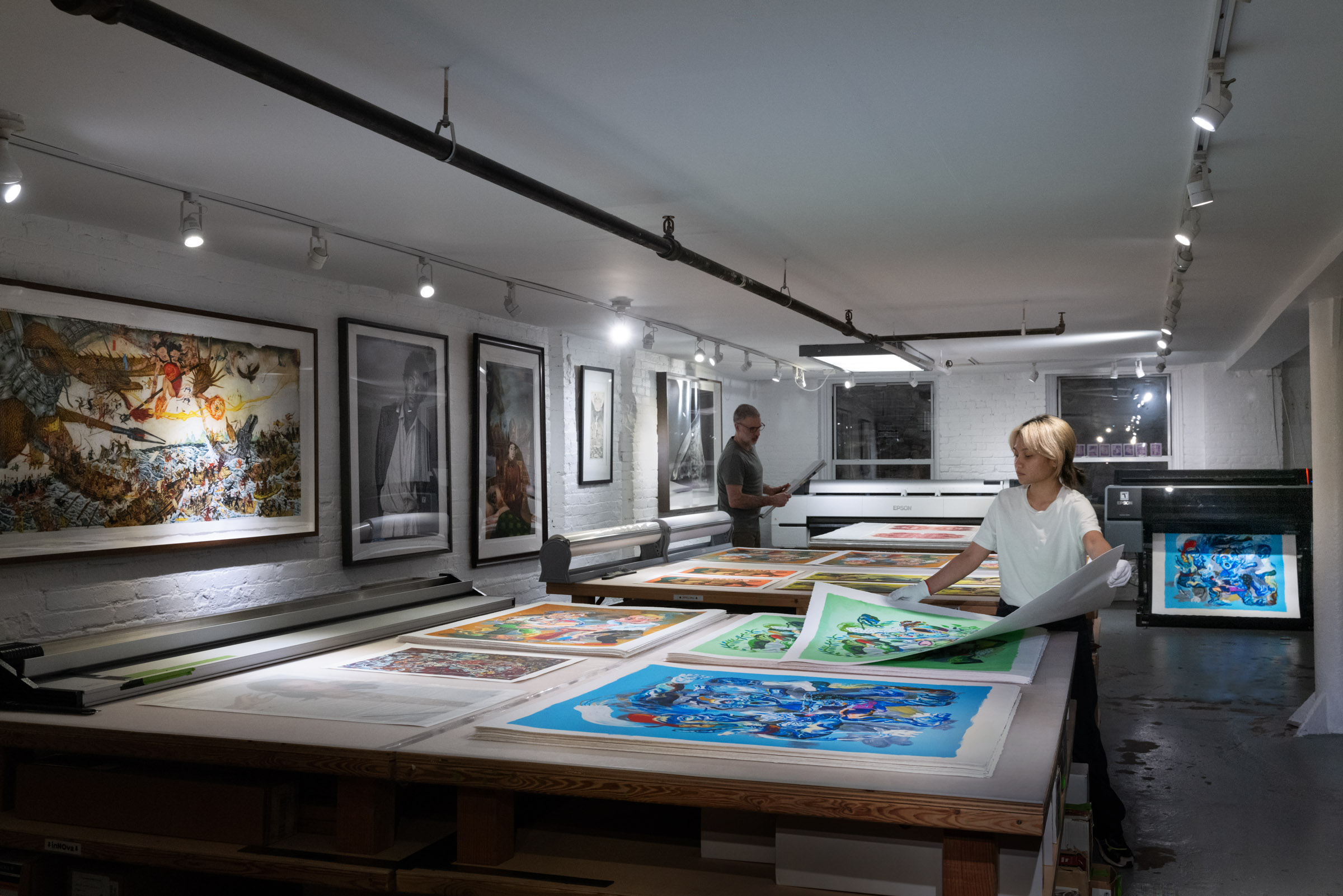
Fine art scanning in NYC means digitizing original artwork on a dedicated scanner rather than a camera, producing a high-resolution, color-accurate file for reproduction, archival, or publication. The work that matters most when choosing a local studio is the equipment (a true fine art scanner, not an office flatbed), a color-managed workflow, a scan bed large enough for your piece, and the option to drop off and pick up in person so an irreplaceable original never ships across the country. Brooklyn Editions scans on the Metis DRS 2020 in Brooklyn, with a contactless single pass for large paintings.
The rest of this article covers who needs fine art scanning in New York, what separates a real fine art studio from a copy shop, how the local process works, and how to handle drop-off and logistics with the original safely in your hands.
Who Needs Fine Art Scanning in NYC?
New York holds one of the densest concentrations of working artists, galleries, collectors, and estates in the world — and each of them comes to scanning for a different reason.
Artists scan original paintings, drawings, and works on paper to make giclée prints, build limited editions, supply images for grant applications and gallery submissions, or simply create a faithful digital record before a piece leaves the studio. A painter who sells the original still keeps the file — and the ability to reproduce.
Galleries need consistent, color-accurate files for online viewing rooms, art-fair catalogues, press images, and condition records. When every work in a show is captured the same way, the gallery's whole presentation reads as coherent rather than improvised.
Collectors digitize works for insurance documentation, loan records, and personal cataloguing. A high-resolution scan is a far more reliable record of a piece's condition than a phone photo, and it gives an appraiser or conservator something precise to work from later.
Estates and foundations face the largest version of this problem: digitizing a deceased artist's body of work for a catalogue raisonné, archival preservation, or licensing. These projects often run to hundreds of pieces and demand consistency across the entire archive, which a dedicated scanner provides and a rotating cast of cameras and lighting setups does not.
What to Look For in a Local Studio
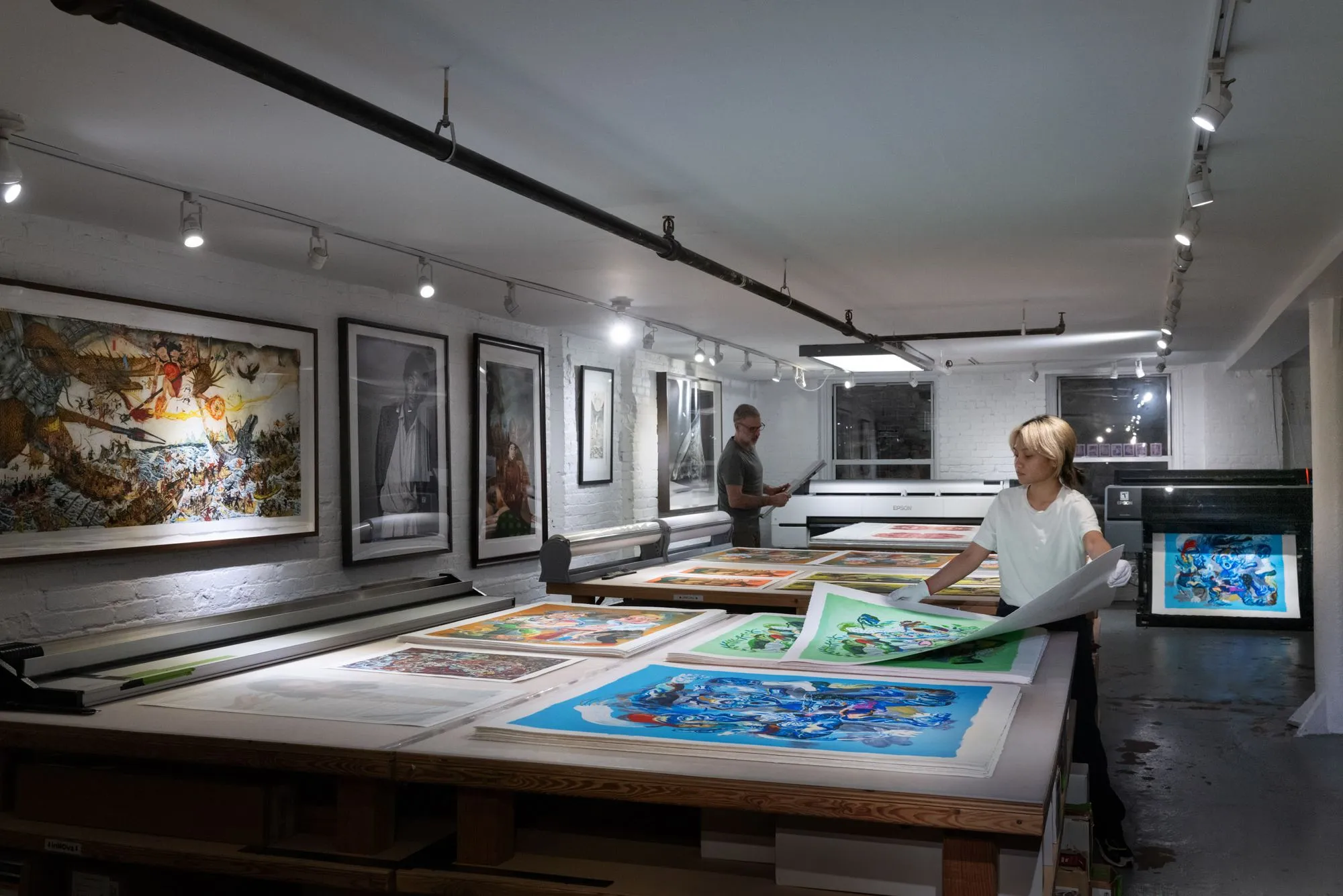
Not every business in New York that advertises "art scanning" is doing fine art scanning. Copy shops, photo labs, and document-imaging services often run office flatbeds with fixed lighting and no color management — adequate for a receipt, inadequate for a painting. Here is what actually separates a fine art studio from the rest.
A true fine art scanner
A real fine art scanner is an optical instrument where the light source and sensor move across the artwork in precise, calibrated registration. Metis and Cruse are the two state-of-the-art makers; their machines are often the size of a car and are found only in cultural institutions and committed fine art studios. Ask any studio directly: what scanner do you use, and what is its native optical resolution? A specific answer is a good sign. A vague one, or a pivot to camera-based "capture," tells you what you need to know. For more on the equipment difference, see our guide to fine art scanning.
A color-managed workflow
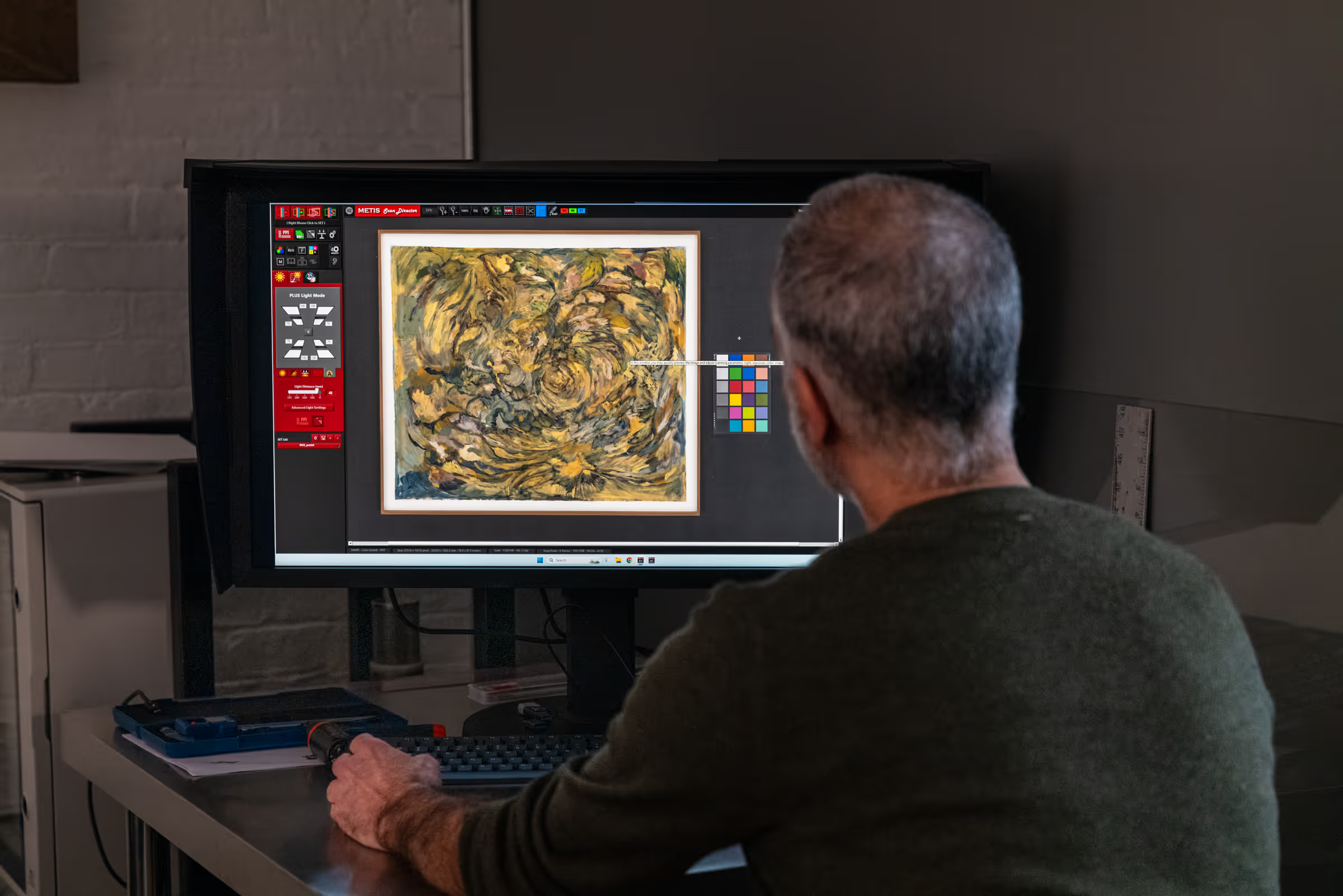
Color management is the difference between a file that matches your original and one that shifts unpredictably the moment it's opened on another screen or sent to a printer. A professional studio calibrates the scanner, captures in a wide-gamut color space such as Adobe RGB, and delivers every file tagged with an ICC profile. Without this, even a high-resolution scan can misrepresent your colors.
The right scan bed for your work
Most flatbed scanners stop at roughly 11 by 17 inches. A canvas larger than that either can't be scanned at all on that machine or gets scanned in sections and stitched by hand, which introduces seams and registration errors. A studio built for large work can capture a painting several feet across in a single pass. If you work at scale, confirm the bed dimensions before you load the van.
Resolution matched to your use
The right resolution depends on what the file is for — 300 PPI at original size is the standard floor for reproduction prints, 600 PPI or higher for archival work, and 1200 PPI and up when you want to enlarge significantly. A studio that asks about your intended use before quoting is doing it right. For the full breakdown, read what resolution artwork should be scanned at.
How the Process Works Locally
Fine art scanning in New York follows the same methodical sequence at any serious studio. Knowing the steps in advance helps you prepare the work and set realistic expectations.
1. Consultation first. Before anything moves, you talk through the artwork's dimensions, medium, surface condition, and intended use. This is where you flag the awkward stuff — a fragile edge, a glossy varnish, metallic pigment, oversized dimensions, or a hard color-accuracy requirement. A reputable studio confirms the project is feasible on its equipment before you bring the work in.
2. Preparing the work. For most scanning, artwork should be unframed, though advanced systems can scan through glass when deframing isn't practical. Charcoal, graphite, and pastel works should be fixed so loose media doesn't shift during capture. Everything should be dry and stable.
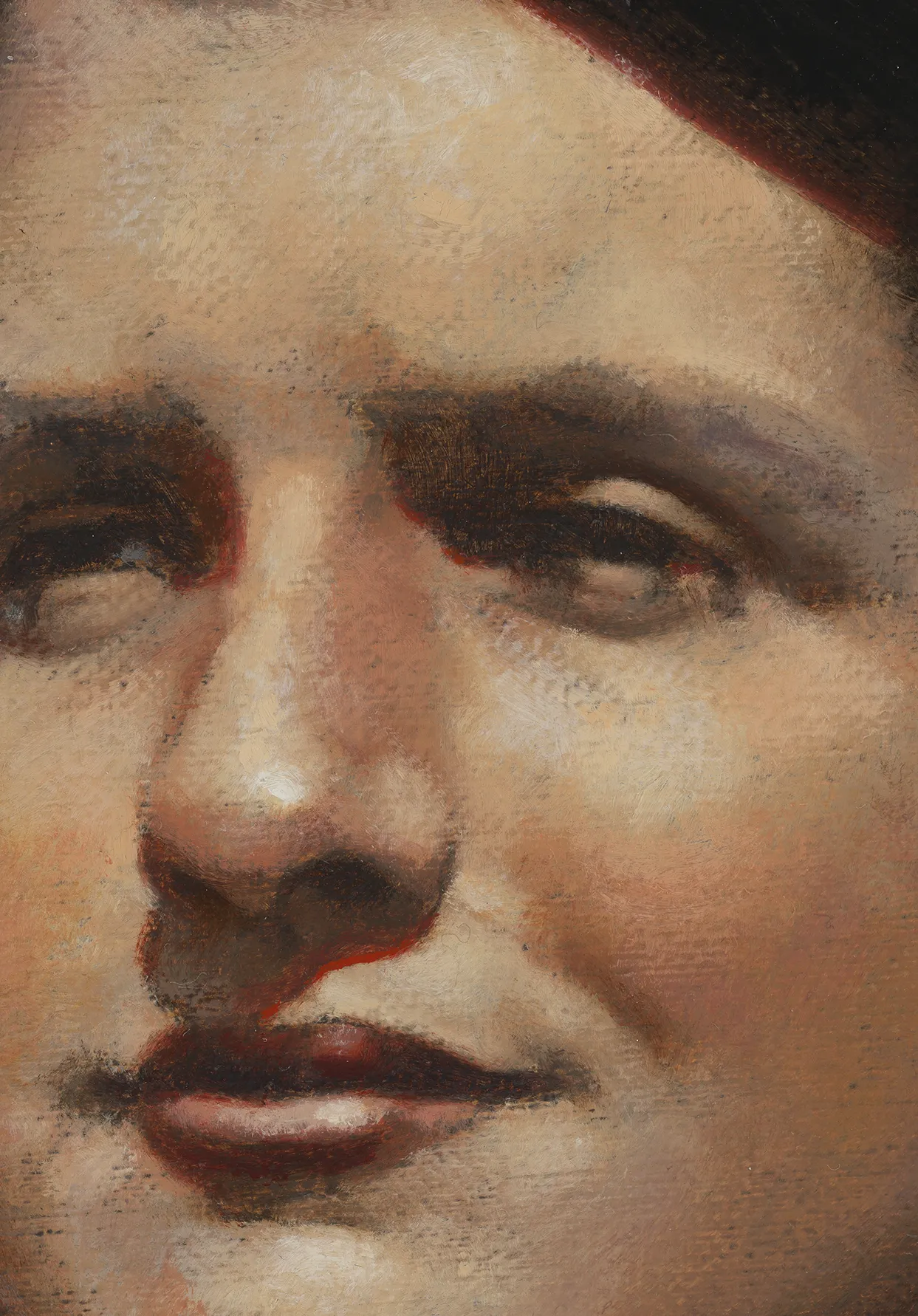
3. The scan. The piece is placed on a contactless scan bed — no pressure on the surface — and the sensor and light source move across it in precisely registered passes. The operator chooses a lighting configuration that best reveals the work's color and surface character. Texture, brushwork, and varnish are handled through directional lighting control rather than ignored.
4. File preparation and delivery. After capture, the studio cleans the file, color-corrects it against the original under calibrated lighting, and delivers a full-resolution TIFF in a wide-gamut color space — usually with a preview file for your approval before the final is released. Ask up front what bit depth, color space, and resolution you'll receive so there are no surprises.
Drop-Off and Logistics in New York
The strongest practical argument for scanning locally is that your original never has to travel far. Shipping an irreplaceable painting across the country to a remote scanning service means handing it to carriers, exposing it to temperature and humidity swings, and accepting real risk for a piece that often can't be replaced or rescanned once it's sold or damaged.
Scanning in NYC keeps the original in your hands. You can drive or courier the work across the city, drop it off, and pick it up — or arrange local art handling for larger or more fragile pieces rather than trusting them to long-haul freight.
For estates and galleries digitizing many works at once, local proximity also lets you stage the project in batches instead of crating an entire collection at the same time.
Being local has a second benefit: proofing. When the studio also prints, you can compare a proof directly against the original under controlled lighting before committing to an edition — impossible once the artwork has shipped back across the country. One note on planning: don't assume a studio's exact hours, drop-off window, or pricing from a blog article. Confirm those directly when you reach out.
Frequently Asked Questions
Where can I get fine art scanning in NYC?
Look for a studio whose primary service is fine art scanning, not a copy shop or document-imaging service. The studio should use a dedicated fine art scanner — a Metis or Cruse system — with a color-managed workflow and a scan bed sized for your work. Brooklyn Editions offers fine art scanning in Brooklyn on the Metis DRS 2020, with in-person drop-off so your original stays close.
Should I ship my artwork or drop it off in person?
For valuable or fragile originals, in-person drop-off or local art handling is far safer than long-haul shipping. Scanning with a New York studio keeps the artwork local, reduces handling risk, and lets you proof a print against the original before an edition is finalized. Shipping an irreplaceable piece across the country adds risk that local scanning avoids entirely.
How much does fine art scanning cost in NYC?
Cost depends on the size of the work, the resolution you need, the number of pieces, and whether you're also printing. Because it varies this much, the right starting point is a consultation where the studio reviews your specific project and intended use before quoting. Ask any studio to confirm pricing directly rather than relying on a general figure.
Can a local studio scan a large painting?
Yes, if it has the right equipment. A professional large-format scanner can capture a painting several feet across in a single contactless pass, with precision stitching available for works that exceed even that footprint. Confirm the studio's scan bed dimensions against your largest piece before bringing the work in, since most consumer flatbeds top out around 11 by 17 inches.
Professional Artwork Digitization at Brooklyn Editions
At Brooklyn Editions, artwork is digitized using the Metis DRS 2020 — a professional scanning system with a native optical resolution up to 1600 PPI and a scan bed capable of capturing large paintings in a single contactless pass. Every scan project begins with a consultation to discuss the artwork, its dimensions, and the intended use of the files, so that we can recommend the right resolution and workflow before any work begins.
If you're planning to reproduce artwork as prints, create an archival digital record, or produce an edition, our scanning services page has full details on the process, file delivery, and how to get started.