
Choosing Paper for Fine Art Prints
Quick answer: For drawings, watercolors, and most paintings reproduced with a soft, paper-forward look, choose a 100% cotton rag matte paper. For photographic work and detailed images that need deep blacks and crisp detail, choose a baryta or gloss surface. For reproductions meant to read as paintings, choose canvas. For anything archival, choose a paper rated acid-free and OBA-free. Match the surface to the work, not to a house default.
The paper you print on does as much to shape a fine art print as the file behind it. It decides how color reads, how deep the blacks go, how sharp fine detail looks, how the surface catches light, and how long the print survives. The same image on two papers can look like two different reproductions. This guide walks through the categories that matter and how to match a paper to the work.
The Two Big Fiber Choices: Cotton Rag vs. Alpha-Cellulose
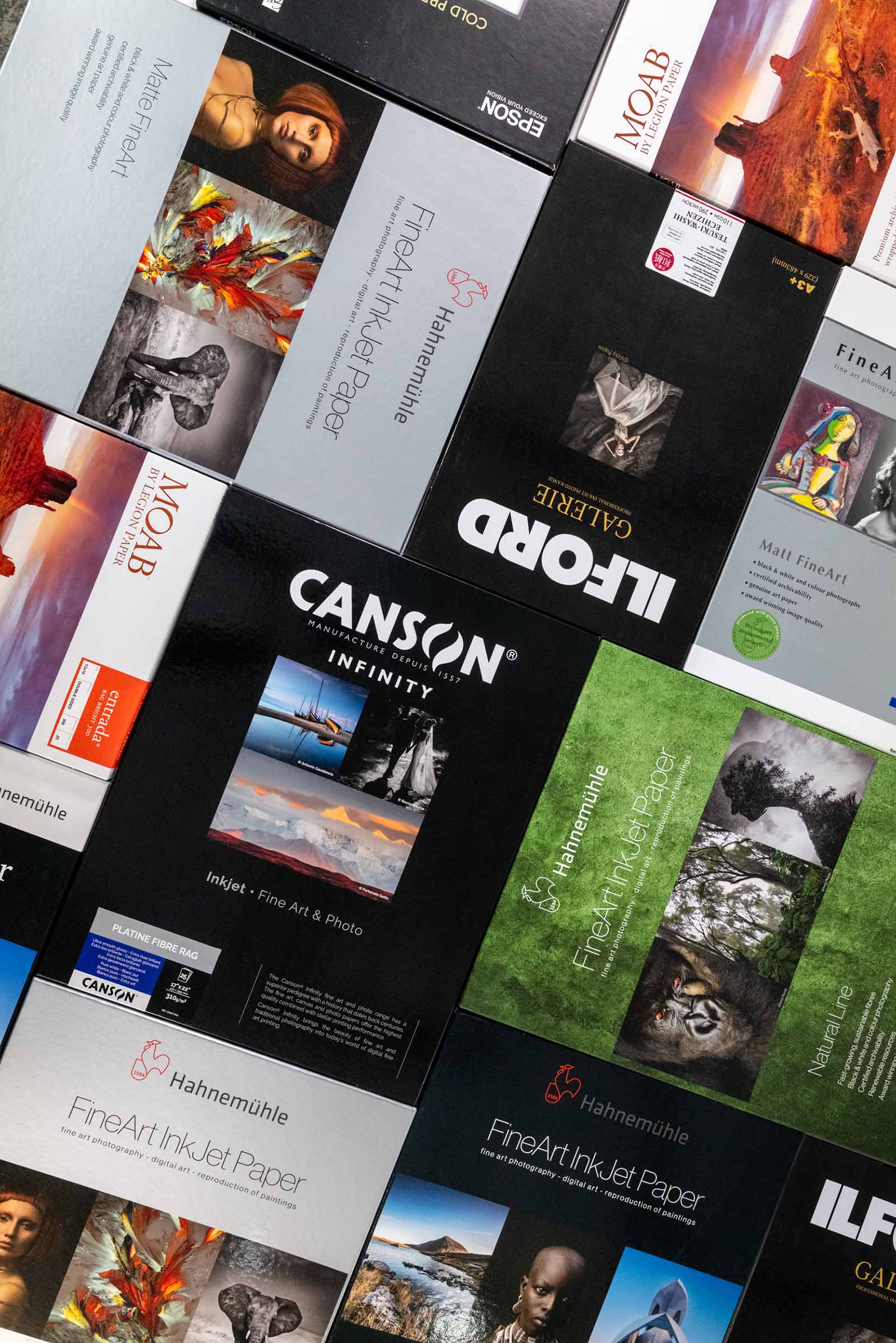
Most fine art papers are built on one of two fiber bases, and the choice affects both feel and longevity.
Cotton Rag
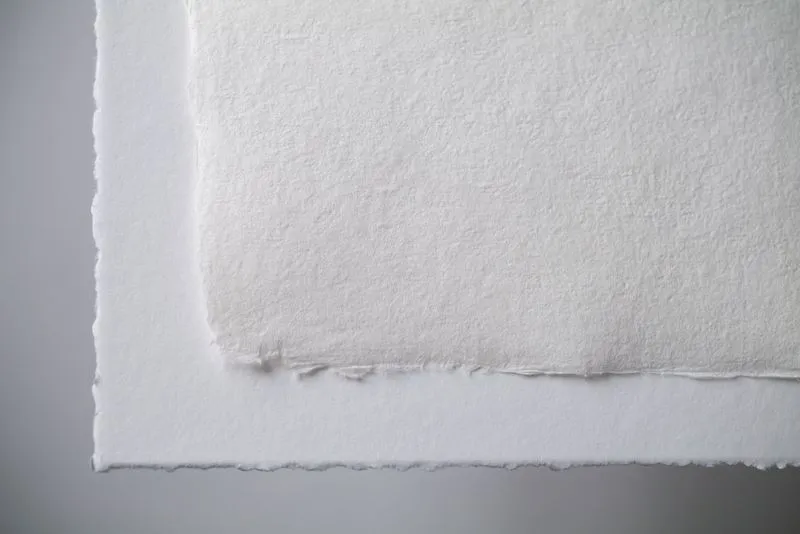
Cotton rag paper is made from 100% cotton fiber. It's the traditional archival substrate — naturally acid-free, dimensionally stable, and long-lived. Cotton rag has a substantial, soft hand and a matte surface that renders drawings, watercolors, gouache, and many paintings with a warm, paper-forward character. When permanence and a fine art feel both matter, cotton rag is the default for a reason.
Alpha-Cellulose
Alpha-cellulose paper is made from highly purified wood pulp rather than cotton. Processed to remove the lignin and acids that cause ordinary paper to yellow and become brittle, a quality alpha-cellulose paper reaches archival standards while usually costing less than cotton rag. It can also be engineered for a brighter white and a smoother surface than cotton typically offers. For work that wants a crisp, bright base at a lower price, alpha-cellulose is a sound choice — provided it's the archival grade, not ordinary wood-pulp paper.
The practical takeaway: both can be archival. Cotton rag leads on tradition, hand, and permanence; alpha-cellulose leads on brightness, smoothness, and cost. Neither is wrong — they suit different work.
Matte vs. Baryta vs. Gloss: The Surface Decision
Surface finish changes how a print looks more visibly than almost any other variable.
Matte
A matte surface has no sheen. It diffuses light, reads cleanly under almost any lighting, and never shows glare — which makes it forgiving to frame and display. The tradeoff is a slightly shorter tonal range: the deepest blacks on a matte paper aren't as deep as on a gloss or baryta surface. Matte suits drawings, watercolors, pastels, and paintings where surface character matters more than maximum contrast.
Baryta
Baryta papers carry a barium-sulfate coating that traces back to the look of traditional darkroom photographic paper. They deliver deeper blacks, a wider tonal range, and sharper apparent detail than matte, with a subtle satin-to-gloss surface. Baryta is the usual choice for photographic prints and for richly detailed paintings that need their full tonal depth. The surface shows some sheen, so lighting and framing deserve a little more thought.
Gloss
A full gloss surface pushes tonal range and detail furthest, with the highest sheen. It maximizes contrast and color saturation but shows glare and fingerprints readily, which is why baryta — most of the tonal benefit with less of the glare — is more common for fine art reproduction. Gloss has its place for certain photographic work.
Canvas and Linen
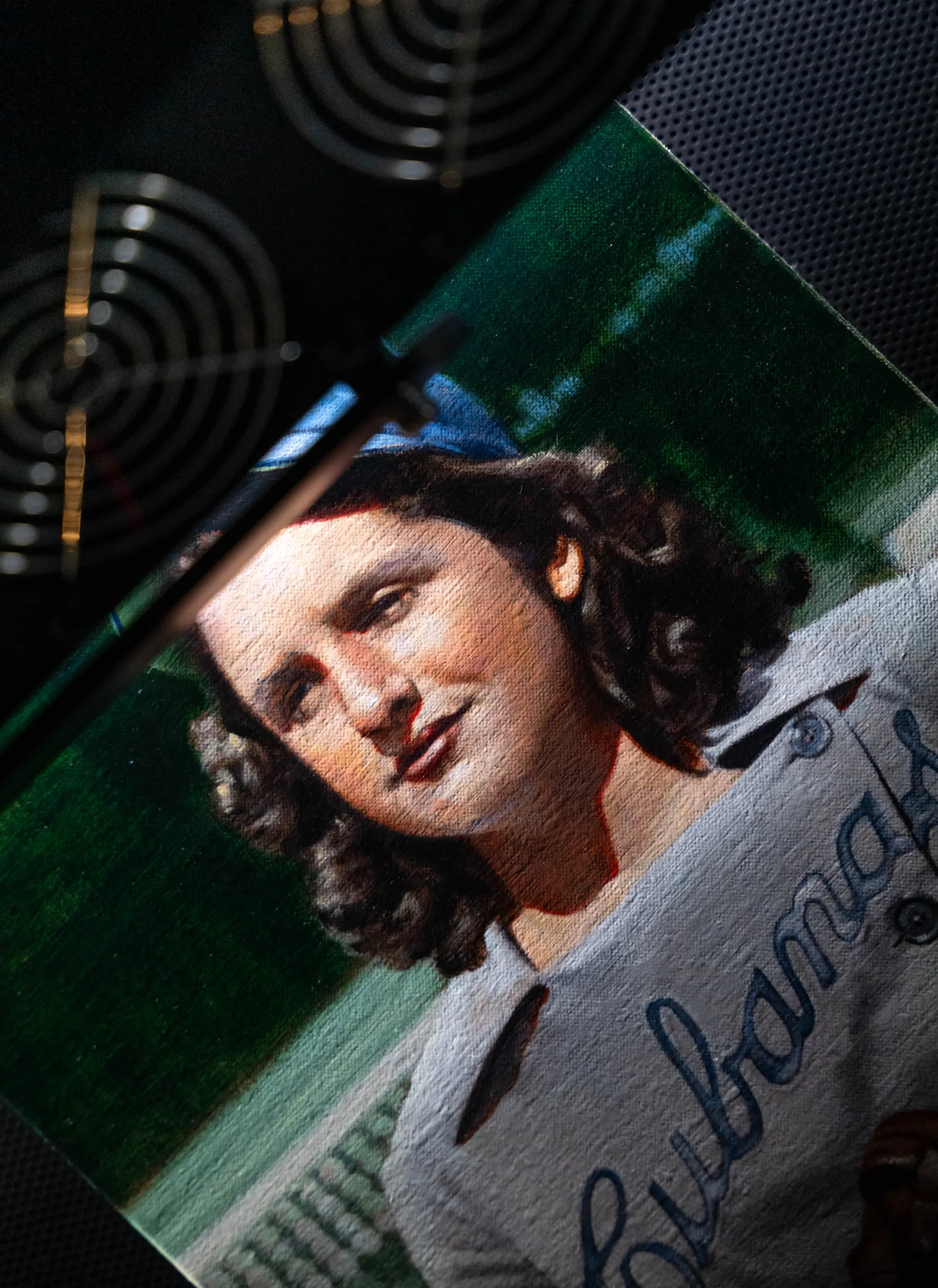
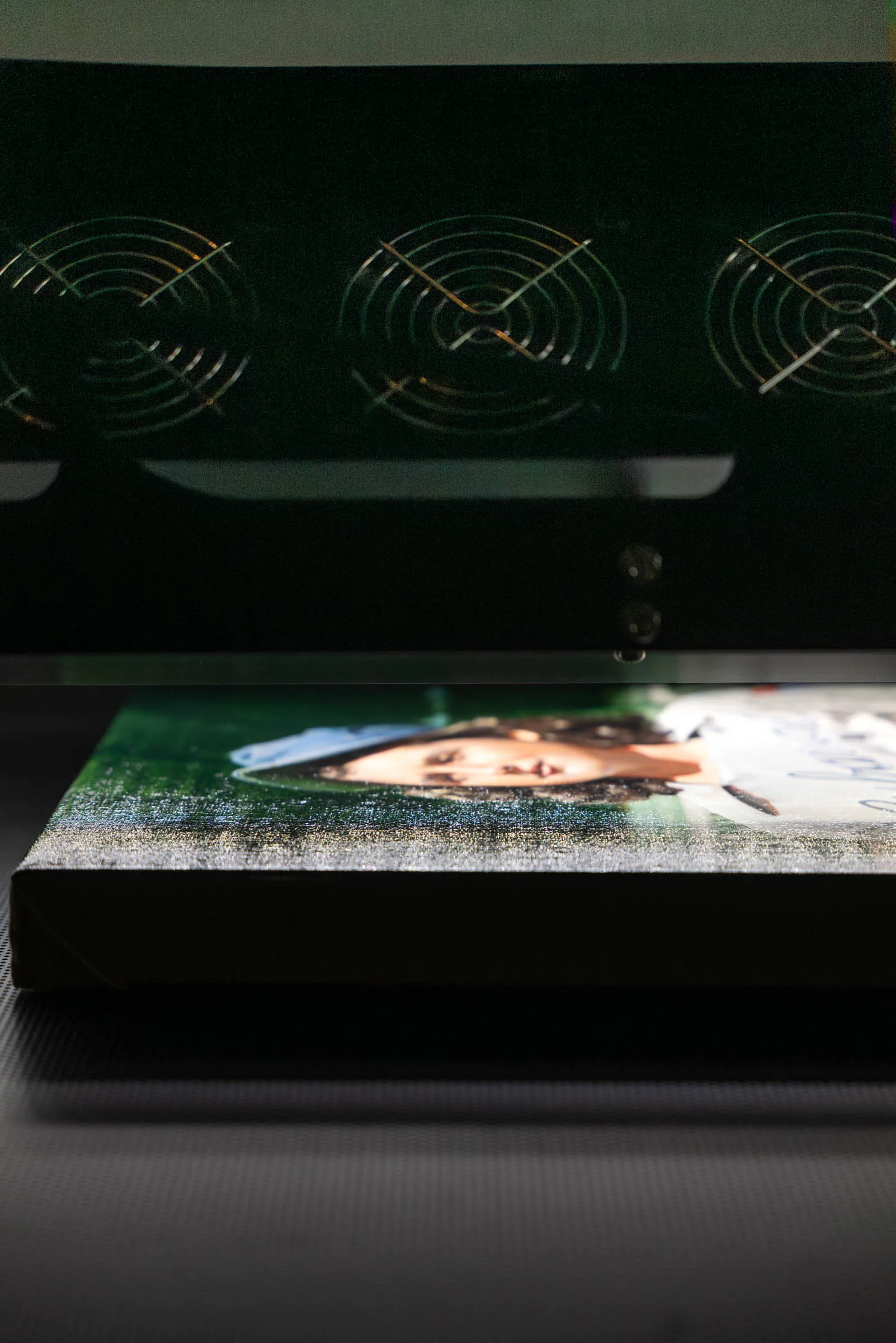
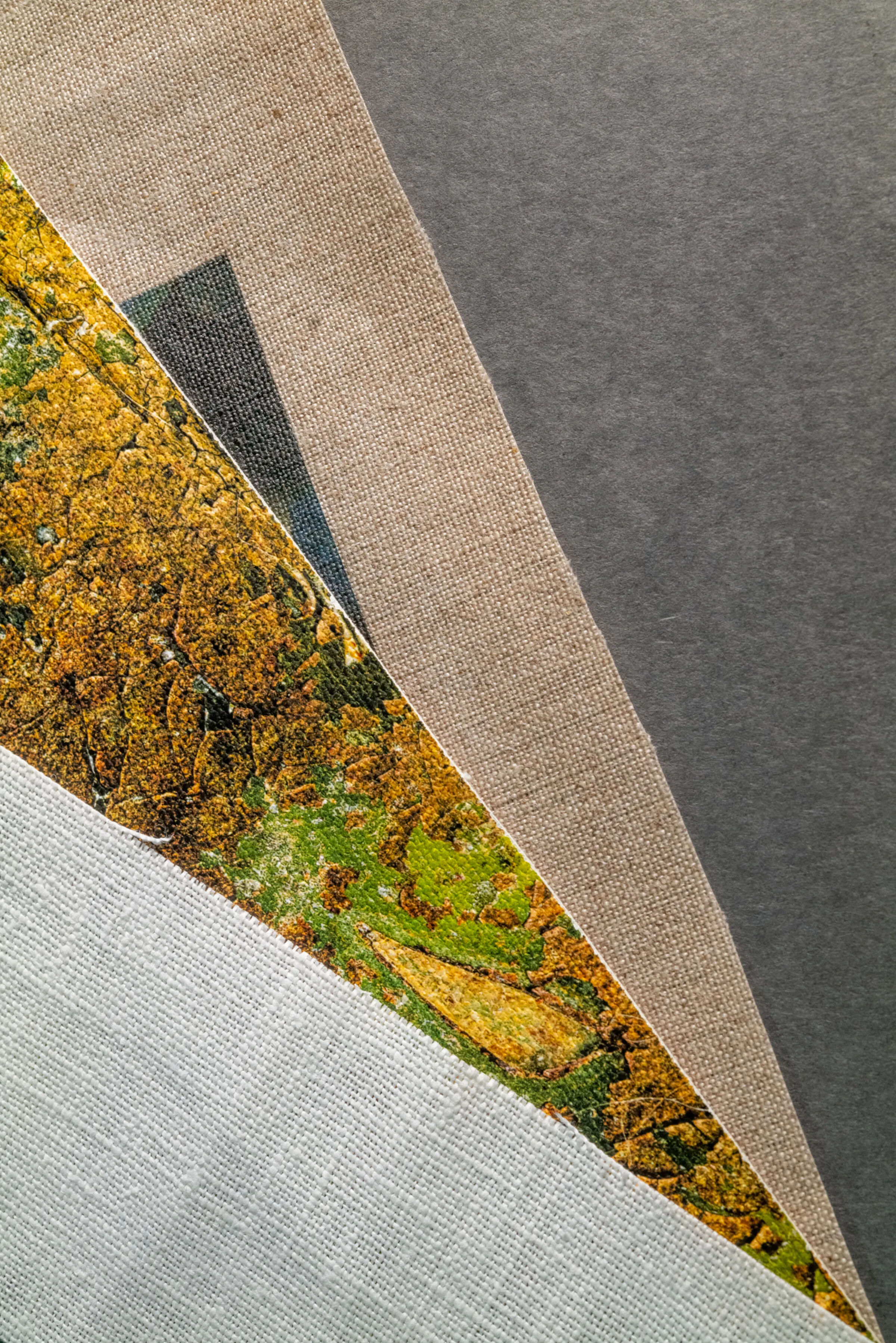
Canvas and linen substrates give a painting reproduction the look and feel expected of a painting — a woven texture, no glass, and a gallery-wrapped presentation. For reproducing oils and acrylics, canvas often reads as more authentic than any paper. The tradeoffs: canvas resolves fine detail less crisply than a smooth paper, and it's usually finished with a protective coating and stretched or wrapped rather than framed behind glass. Match canvas to work that was a painting to begin with; it rarely flatters a drawing or photograph.
OBAs and Brighteners
Optical brightening agents — OBAs — are additives that absorb ultraviolet light and re-emit it as visible blue, making a paper look brighter and whiter than its fibers actually are. They're common in consumer and many alpha-cellulose papers because a brighter white is an easy sell.
For fine art and archival work, OBAs carry two problems. They shift the paper's apparent color depending on the light source — a print that looks neutral under gallery light can look different under daylight or LED — so they undercut color accuracy. And they fade over time, which means the paper's white point drifts as the brighteners break down, slowly warming the whole print. For archival reproduction, an OBA-free paper holds its color and white point far more reliably. If you want a bright white that lasts, look for a paper that achieves it through fiber and coating rather than brighteners.
Archival Standards: What to Actually Ask For
"Archival" is used loosely. A few concrete properties make a paper genuinely archival.
- Acid-free / neutral pH. Acidity is what makes ordinary paper yellow and grow brittle. Archival papers are acid-free, whether through cotton fiber or purified alpha-cellulose.
- OBA-free, or low-OBA. For color stability and a stable white point over time, prefer papers without optical brighteners.
- Lignin-free. Lignin in wood pulp accelerates yellowing; archival alpha-cellulose papers have it removed.
- Pigment inks, not dyes. Permanence is a paper-and-ink system. Archival pigment inks resist fading far longer than dye inks, and the substrate's rating assumes a pigment workflow.
Longevity is a property of the whole system — paper, ink, coating, and display conditions together — not of the paper alone. A genuinely archival print pairs an acid-free, OBA-free substrate with archival pigment inks and is displayed out of direct sunlight.
Matching Paper to the Work
The decision comes together when you match surface, fiber, and finish to the specific piece and how it'll be shown.
- Watercolor, drawing, pastel, gouache: matte cotton rag. Soft surface, archival permanence, the paper-forward character these media expect.
- Oil and acrylic paintings (paper reproduction): matte cotton rag for a fine art print, or a textured fine art paper; baryta if the work needs maximum tonal depth.
- Oil and acrylic paintings (painting reproduction): canvas or linen, for the look and feel of the original medium.
- Photographic prints and highly detailed images: baryta, for deep blacks, full tonal range, and crisp detail.
- Bright, graphic, or contemporary work on a budget: archival alpha-cellulose, for a brighter, smoother base at lower cost.
Whatever you choose, the paper has to be part of a color-managed workflow. Each substrate has its own ICC output profile, and printing a file without the right paper profile is where color fidelity quietly slips. The most reliable way to decide is to see a proof on the actual paper before committing to an edition.
Frequently Asked Questions
What is the best paper for fine art prints?
There's no single best paper — the right choice depends on the work. For drawings and watercolors, 100% cotton rag matte is the standard. For photographic and highly detailed work, baryta delivers deeper blacks and sharper detail. For painting reproductions, canvas reads most authentically. The best paper is the one matched to the medium and the display.
What is the difference between cotton rag and alpha-cellulose paper?
Cotton rag is made from 100% cotton fiber and is naturally acid-free, with a substantial hand and traditional fine art character. Alpha-cellulose is made from purified wood pulp processed to archival standards, usually at lower cost, often with a brighter, smoother surface. Both can be archival; they differ in feel, brightness, and price.
Should fine art paper have optical brighteners?
For archival work, prefer OBA-free paper. Optical brighteners make paper look whiter but shift its apparent color under different light sources and fade over time, drifting the print's white point. An OBA-free paper holds its color and white point far more reliably over the life of the print.
Is matte or glossy better for art prints?
Matte diffuses light, never shows glare, and suits drawings, watercolors, and paintings, at the cost of slightly less tonal depth. Baryta or gloss delivers deeper blacks and sharper detail, which suits photographic and highly detailed work, but shows more sheen. Choose by the work and how it'll be lit and framed.
Professional Fine Art Reproduction at Brooklyn Editions
Brooklyn Editions reproduces original artwork as giclee and archival pigment prints, scanning on the Metis DRS 2020 and printing under one color-managed roof so the chain from original to print never breaks. Every project starts with a consultation about your work and how you want to print it, and editions are proofed against the original before they run. To start a reproduction, see our fine art printing services, and for the capture side of the process, read our guide to fine art scanning.